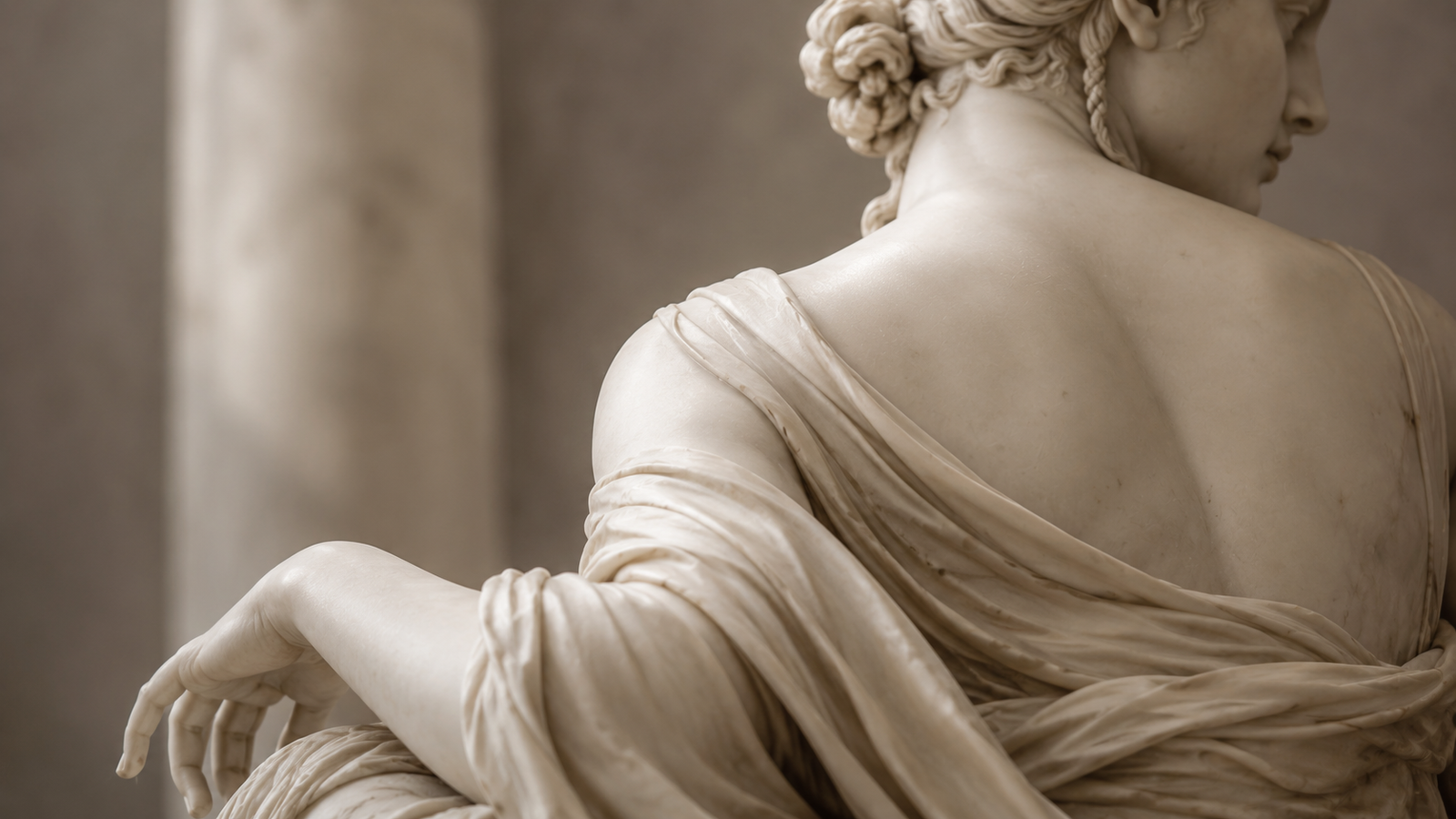
Why every major culture has a beauty deity
The presence of beauty deities across virtually every major world religion is one of the most striking patterns in comparative mythology. From the Mediterranean basin to West Africa, from northern Europe to the Indus Valley, from Mesoamerica to East Asia — wherever there have been complex civilizations, there have been goddesses (and occasionally gods) specifically associated with beauty.
This isn't a coincidence. Beauty has been treated as a fundamental cosmic principle across cultures — something deserving of its own divine personification rather than being relegated to lesser status. And the specific qualities each culture grouped with beauty reveal what that civilization actually meant by "beauty" itself.
This article walks through the major beauty deities, what each one represented, and what their specific configurations reveal about how their cultures conceived of beauty. The pattern that emerges is important: beauty has never been a standalone concept anywhere. It has always been part of a constellation with other qualities — love, fertility, prosperity, war, water, music, purification — and that constellation varies dramatically across cultures.
This connects directly to our piece on beauty standards across cultures: if the very concept of beauty differs across civilizations, of course the standards do too.
Aphrodite and Venus (Greek and Roman)
The most famous beauty goddess in Western tradition, and the one most modern Western readers think of when they hear "goddess of beauty."
Aphrodite in Greek tradition
According to Hesiod's Theogony, Aphrodite was born from the sea foam (aphros in Greek) that formed when Cronus castrated his father Uranus and threw the body parts into the sea. She emerged from the waves fully formed, an adult goddess, and was carried to the island of Cyprus.
An alternative tradition, found in Homer, makes her the daughter of Zeus and the Titan goddess Dione. The two origin stories were both maintained throughout antiquity without much effort to reconcile them — which itself reveals how mythology accommodates multiple meanings.
Aphrodite's domain included:
- Physical beauty and attraction
- Romantic and erotic love
- Pleasure and sensuality
- Fertility and procreation
- The sea (her birth element)
- Spring and flowers
She was married unhappily to Hephaestus, the smith god, but conducted famous affairs with Ares (god of war) and the mortal Adonis. Her son Eros (Cupid in Roman tradition) carried her work into human hearts.
Venus in Roman tradition
The Roman goddess Venus had her own pre-Hellenic origins. She was originally associated with cultivated fields, gardens, and vegetation — agricultural beauty rather than personal beauty. When the Romans encountered Greek religion and began systematic identification of their gods with Greek counterparts (the interpretatio romana), Venus was identified with Aphrodite and absorbed her mythology and characteristics.
The Romans added their own significance: through her son Aeneas (the legendary founder of Rome), Venus was understood as the divine ancestress of the Roman people. Julius Caesar and his family claimed descent from her. This gave Roman Venus a political and dynastic dimension Aphrodite never had in Greek tradition.
What this combination reveals
Aphrodite/Venus reveals the Greco-Roman understanding of beauty as: emergent from cosmic chaos (the sea-foam birth), inseparable from desire and love, sometimes adulterous and transgressive, dynastically significant, and aesthetically idealized in physical form (most of her famous statues focus on the perfected female body).
This particular configuration shaped Western art for two millennia. The "Birth of Venus" iconography, the focus on the nude female body as beauty's purest expression, the romantic-erotic emphasis — all of this is downstream of Aphrodite specifically, not of beauty deities generally.
Western culture often treats Aphrodite/Venus as the goddess of beauty — as if she were the universal expression of a universal concept. The reality is that she's one cultural expression among many. The choices her mythology made (sea-foam birth, romantic love emphasis, idealized physical form) are Greco-Roman choices, not features of beauty itself.
Hathor (Egyptian)
Hathor was one of the most important and ancient goddesses of ancient Egypt, worshipped continuously from the early dynastic period (around 3100 BCE) through the Greco-Roman period — over 3,000 years.
Her domains
Hathor's associations were unusually broad:
- Beauty and feminine grace
- Music, dance, and joy
- Love (both romantic and motherly)
- Fertility and childbirth
- Mining and turquoise (she was called "Mistress of Turquoise")
- The sky and stars
- Mortuary protection — guiding souls to the afterlife
She was typically depicted as a woman wearing a headdress of cow horns with a sun disk between them, or sometimes as a cow herself, or as a woman with cow's ears. The cow association tied her to maternal nurturing — she was sometimes called "the great cow who gave birth to the sun."
What Hathor reveals
The Egyptian configuration of beauty differs from the Greek in significant ways. Hathor pairs beauty with music, dance, joy, and motherly care — making beauty primarily about the experience of being alive joyfully, rather than about erotic desire specifically. The sun-disk iconography ties beauty to cosmic order and the daily renewal of the world. The cow association connects beauty to nurturance and sustenance.
This is beauty as life-giving celebration rather than beauty as romantic attraction. Both are recognizable as "beauty" concepts, but they emphasize different aspects of human experience.
Lakshmi (Hindu)
Lakshmi (also Sri or Shri) is one of the most widely worshipped deities in Hindu tradition. She is the goddess of fortune, wealth, prosperity, abundance, and beauty — and crucially, these are not separable in her conception.
Her iconography
Lakshmi is typically depicted as a beautiful woman with golden skin, four arms (sometimes two), seated or standing on a lotus flower, often holding lotus flowers in her hands. Coins flow from one palm. Elephants stand on either side, sometimes pouring water over her. She is serene, smiling gently.
Each iconographic element carries meaning:
- Lotus: purity rising from murky water, beauty inseparable from spiritual ascent
- Gold skin: light, warmth, abundance
- Four arms: the four ends of human life (dharma/duty, artha/wealth, kama/pleasure, moksha/liberation)
- Coins from palm: generative abundance flowing from divine source
- Elephants: royal power and fertility
Lakshmi's significance
Lakshmi is the consort of Vishnu, the preserver god. When Vishnu incarnates on earth (as Rama, as Krishna, as other forms), Lakshmi incarnates alongside him (as Sita, as Rukmini, as others). Their relationship represents the union of beauty and protection, abundance and continuity.
The festival of Diwali (the festival of lights) is partly dedicated to Lakshmi. Households clean and decorate to invite her blessings; small lamps line doorways and windows to welcome her.
What Lakshmi reveals
The Hindu conception pairs beauty inseparably with prosperity, abundance, and fortune. Beauty isn't just an aesthetic quality — it's the visible form of underlying flourishing. To be beautiful is to be blessed; to be blessed is to be beautiful. This conception is markedly different from the Greco-Roman emphasis on beauty as erotic attraction.
This has practical implications still visible in Indian aesthetics today: gold jewelry, abundant ornament, fullness rather than thinness in classical depictions, an aesthetic of plenitude rather than restraint. The cultural memory of Lakshmi continues to shape what beauty looks like in much of South Asia.
Freya (Norse)
Freya (sometimes Freyja) is the principal goddess of love, beauty, fertility, war, and seiðr (magic) in Norse mythology. She belongs to the Vanir tribe of gods, distinguished from the Aesir (Odin, Thor, etc.), though after a war the two tribes were unified.
Her domains and iconography
Freya's range was remarkable:
- Love and beauty
- Fertility and sexuality
- War and battle — she received half of the warriors who died in battle (Odin received the other half)
- Magic, particularly seiðr (a type of shamanic magic)
- Gold and treasure
She rode a chariot pulled by cats, wore the precious Brísingamen necklace, and could take the form of a falcon using her cloak of falcon feathers. She wept tears of gold when grieving for her lost husband Óðr.
What Freya reveals
The Norse configuration is striking for combining beauty with war. Freya is not a peaceful goddess. She receives half of all battle-slain warriors in her hall Sessrúmnir; she rides into battle herself. The pairing of beauty with martial power, magic, and gold reflects a culture where beauty was understood as one expression of personal power — including the power to fight, to enchant, to acquire treasure.
This is beauty as agency rather than beauty as passive object of admiration. The contrast with later European traditions of "beautiful damsel needing rescue" is sharp — pre-Christian Norse culture had no such category. Freya's beauty was her sword as much as her face.
Oshun (Yoruba)
Oshun (Ọṣun) is the orisha of fresh water, love, sensuality, sweetness, and beauty in the Yoruba religious tradition of West Africa. She remains one of the most widely venerated deities in Yoruba religion and in its diaspora forms — Santería in Cuba, Candomblé in Brazil, Vodou in Haiti, and other Black Atlantic religions.
Her associations
- Fresh water — particularly the Osun River in Nigeria
- Love and sensuality
- Beauty and adornment
- Honey and sweetness
- Brass and yellow gold
- Mirrors and combs
- Female sovereignty and feminine power
- Healing, particularly fertility-related healing
- The number five
Oshun is depicted as beautiful, golden-skinned, often dancing, wearing brass jewelry and yellow clothing. She is associated with the color yellow (or sometimes amber/gold). Honey is sacred to her — but honey must be tasted before offering, because in one myth Oshun was once poisoned by an offering of honey that had not been verified.
Oshun's mythology
In one of the most important Yoruba creation stories, the male orishas (Ogun, Shango, and others) had been sent to set up the world but were failing. They had ignored Oshun, considering her presence unnecessary. The world was barren and lifeless. Olódùmarè (the supreme god) revealed that without Oshun's energy — the sweetness, beauty, and life-giving water she represents — nothing could flourish. The orishas had to ask her to join, and she did, restoring fertility and beauty to creation.
The story makes the theological point that beauty is not optional decoration on top of an otherwise functional world. Beauty is itself a generative principle without which nothing works.
What Oshun reveals
The Yoruba configuration pairs beauty with fresh water, sweetness, female sovereignty, and necessity. Beauty here is a life-giving force — without which civilization itself fails. This is dramatically different from the Greek conception of beauty as an emergent property born of cosmic chaos. In Yoruba thought, beauty is an active necessary principle, not an effect.
The continuing veneration of Oshun across the Black Atlantic — from Brazil to Cuba to the United States — keeps this distinctive conception of beauty alive in religions practiced by millions of people today.
Inanna and Ishtar (Mesopotamian)
Inanna (in Sumerian) and Ishtar (in Akkadian, Babylonian, and Assyrian) are essentially the same goddess across the long history of Mesopotamian civilization, with names changing as languages and empires shifted. She is among the oldest deities in recorded human religion — texts about her date back to the third millennium BCE.
Her domains
- Love, sex, and desire
- Beauty
- War
- Justice and political power
- The planet Venus (her star)
- Storms
Inanna/Ishtar was depicted with eight-pointed star symbols representing Venus, sometimes with lions (her sacred animal), sometimes with a vulva (a common ancient symbol of feminine divine power).
The Descent of Inanna
One of the most famous and oldest pieces of recorded literature is "The Descent of Inanna," in which she travels to the underworld to visit her sister Ereshkigal, is killed there, hangs as a corpse for three days, and is resurrected. The text is approximately 4,000 years old and remains one of the most studied works of ancient literature.
The journey carries themes of death and rebirth, the limits of even divine power, and the necessity of descent for renewal — themes that influenced later mythological traditions across the Middle East and Mediterranean.
What Inanna/Ishtar reveals
The Mesopotamian configuration pairs beauty with war, political sovereignty, and cosmic justice. Like Freya, she combines beauty with martial power. Unlike Freya, she also wields political and judicial authority — Inanna/Ishtar was associated with kingship, with the legitimacy of rulers, with the proper ordering of states.
This is beauty as imperial principle — beauty connected to civilization itself, to the right ordering of cities, to the legitimacy of power. The Mesopotamian conception is the most clearly political of the beauty deities considered here.
Tlazolteotl and other beauty deities
Several other significant beauty deities deserve mention briefly:
Tlazolteotl (Aztec)
Tlazolteotl was an Aztec goddess associated with beauty, sexuality, purification, and the eating of filth — she would consume sins and transgressions, transforming them. Her name has been translated as "filth-eating goddess" or "lust goddess." The combination of beauty with purification through consumption of impurity is distinctive: beauty here is closely connected to ritual cleansing and the transformation of what is harmful or impure. The Aztec configuration sees beauty as restorative.
Xochiquetzal (Aztec)
The Aztec goddess of beauty, art, flowers, sexuality, and the young moon. More straightforwardly aesthetic than Tlazolteotl, she was patroness of artisans, painters, and weavers — beauty as creative making. Her name means "flower-precious feather."
Hathor's relatives and successors (Egyptian)
Egyptian religion had multiple deities associated with aspects of beauty — Bastet (cat goddess of grace, perfume, joy), Nephthys, and others. Hathor was first among them but not alone.
Saraswati (Hindu)
While Lakshmi is the goddess of material beauty and prosperity, Saraswati represents intellectual and artistic beauty — knowledge, music, learning, the arts. She is depicted holding a veena (musical instrument), playing music, with a peacock or swan nearby. The Hindu tradition thus distinguishes between two kinds of beauty: material/abundant (Lakshmi) and intellectual/artistic (Saraswati). Both are divine, and both are worshipped.
Benten (Japanese)
The Japanese goddess Benzaiten (commonly called Benten) is associated with beauty, knowledge, music, and water. She originated from the Hindu Saraswati through Buddhist transmission, then took on local Japanese characteristics. The transmission shows how beauty deities travel across cultures, carrying their associations and absorbing new ones.
Mami Wata (West African and diaspora)
A water spirit venerated across much of West, Central, and Southern Africa and in the African diaspora. Mami Wata is associated with beauty, water, healing, and wealth. Often depicted with a fish-tail (mermaid form) or with serpents, she has been continuously venerated for centuries and continues to be central in many contemporary West African and diasporic spiritual practices.
What beauty deities reveal about each culture
Stepping back from the individual goddesses, the cross-cultural pattern is striking. Beauty has been paired with:
| Culture | Primary beauty deity | Beauty paired with |
|---|---|---|
| Greek / Roman | Aphrodite / Venus | Love, desire, sea, springtime, dynasty |
| Egyptian | Hathor | Music, joy, motherhood, the sun, afterlife protection |
| Hindu | Lakshmi | Fortune, prosperity, abundance, lotus, gold |
| Norse | Freya | Love, war, magic, gold, cats and falcons |
| Yoruba | Oshun | Fresh water, sweetness, sovereignty, brass, life-giving necessity |
| Mesopotamian | Inanna / Ishtar | Love, war, kingship, the planet Venus, descent and rebirth |
| Aztec | Tlazolteotl, Xochiquetzal | Purification, sexuality; flowers, art, weaving |
| Hindu | Saraswati | Knowledge, music, learning, the arts |
| Japanese | Benten / Benzaiten | Music, knowledge, water (from Saraswati through Buddhism) |
Several patterns emerge:
Beauty is never alone
No major culture treats beauty as a standalone quality. It's always paired with other generative principles — love, prosperity, music, water, sovereignty, war, knowledge. The specific pairing reveals what each culture saw as inseparable from beauty itself.
Most beauty deities are feminine
Across cultures, beauty has been overwhelmingly personified as feminine. This isn't universal — there are masculine beauty figures (Adonis in Greek tradition, Krishna in Hindu tradition, Apollo for masculine aesthetic ideal) — but the personification of beauty itself has been predominantly female. This reflects ancient cultural patterns rather than anything intrinsic to beauty.
Beauty deities often combine with apparent opposites
The combination of beauty with war (Freya, Inanna), beauty with filth-eating purification (Tlazolteotl), beauty with death rituals (Hathor) is striking. Cultures repeatedly recognized that beauty and what we now consider its opposites are connected, not separate.
Water appears repeatedly
Aphrodite born from sea foam, Oshun of the Osun River, Lakshmi rising from the cosmic ocean during the churning of the milk sea, Inanna/Ishtar associated with rivers and the planet Venus, Saraswati originally a river goddess, Benten associated with water and islands, Mami Wata as water spirit. Water appears in nearly every beauty deity tradition. This is probably not coincidence — water is itself generative, life-giving, beautiful, and dangerous, mirroring the conceptual structure of beauty itself.
The modern echoes of these traditions
Reading about beauty deities is not just historical curiosity. These traditions continue to shape how their inheritor cultures think about beauty today.
The Greco-Roman shadow over Western beauty
The continuing dominance of Aphrodite/Venus iconography in Western art and culture means modern Western beauty standards still carry her specific configurations — the focus on the idealized nude form, the connection of beauty to romantic-erotic desire specifically, the treatment of beauty as somewhat separate from prosperity or political power. When Western beauty content treats beauty primarily as an erotic and aesthetic quality rather than as inseparable from prosperity (Lakshmi) or sovereignty (Inanna), this reflects an inherited Greek configuration, not a universal truth.
South Asian beauty as abundance
The persistent South Asian aesthetic of gold, ornament, color, and visible abundance reflects Lakshmi's continuing cultural presence. The Indian wedding aesthetic — golden jewelry, vivid colors, elaborate decoration, abundant flowers — is recognizable as Lakshmi-iconography even when not consciously referenced as such. When you see this style described in Western publications as "exotic" or "excessive," that's a Greco-Roman aesthetic mistaking Hindu aesthetics for excess rather than recognizing a different configuration of beauty.
African and diasporic beauty traditions
Oshun's continuing veneration across the Black Atlantic shapes contemporary African and diasporic aesthetics — the centrality of yellow and gold, brass jewelry, water imagery, the connection of feminine beauty to spiritual practice. Contemporary Yoruba artists, Afro-Cuban Santería practitioners, Brazilian Candomblé communities, and many others maintain this living tradition.
Norse echoes in Nordic minimalism
Modern Scandinavian aesthetic traditions — which emphasize agency, capability, and unembellished strength rather than ornamentation — show traces of Freya's complex of beauty + power. The contemporary "Nordic" aesthetic ethos doesn't directly trace to Freya, but its rejection of pure decoration in favor of beauty-as-strength has cultural roots.
What this means for thinking about beauty today
The diversity of beauty deities across cultures is not just historical trivia. It directly contradicts the modern marketing message that there is a single global beauty standard everyone is moving toward. Different cultures have configured beauty very differently for thousands of years, and those configurations persist in contemporary aesthetic preferences.
This connects directly to our pieces on beauty standards across cultures, Korean beauty standards, and Chinese beauty standards. The variation isn't superficial — it goes all the way down to the divine configurations cultures made for the concept of beauty itself.
The bottom line: Every major civilization has had its goddess of beauty — Aphrodite, Venus, Hathor, Lakshmi, Freya, Oshun, Inanna, Tlazolteotl, Xochiquetzal, Saraswati, Benten, Mami Wata, and others. Each goddess paired beauty with specific other qualities — love and sea (Aphrodite), music and joy (Hathor), prosperity and lotus (Lakshmi), war and gold (Freya), fresh water and sovereignty (Oshun), kingship and the planet Venus (Inanna). These configurations weren't accidental — they revealed what each culture saw as inseparable from beauty itself. The continuing influence of these traditions means contemporary beauty aesthetics still reflect ancient choices made about what beauty is for, what it goes with, and what it costs to ignore. The Western tendency to treat Aphrodite's specific configuration as the universal definition of beauty is itself a culturally specific position — one of many possible configurations, not the only one.