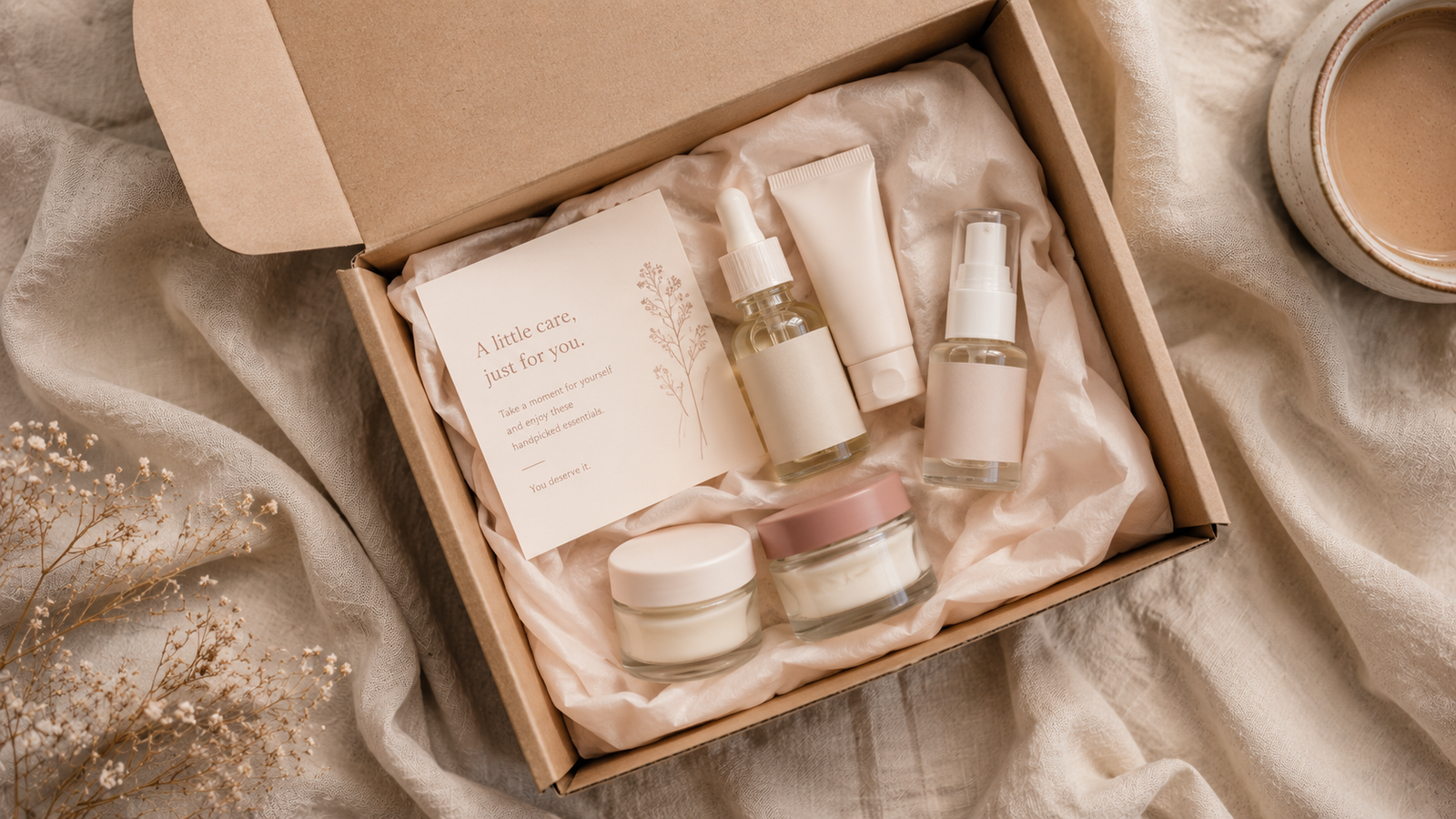
What beauty boxes actually are
A beauty subscription box is a service that delivers beauty products — samples, full-size, or a mix — to subscribers at regular intervals (typically monthly or quarterly) for a fixed price. The service selects the products, either through curation, personalization based on customer preferences, or thematic selection.
The core value proposition
Beauty boxes offer:
- Discovery of new brands and products
- Lower per-product cost than buying retail
- Convenience of curation
- Surprise/experience element
- Sample sizes appropriate for travel
The core commercial model
Beauty boxes work economically through:
- Direct subscription revenue at scale
- Brand partnership fees for product inclusion
- Bulk product acquisition at deep discounts
- Data collection and monetization
- Add-on retail sales through the box's shop
What separates beauty boxes from beauty retail
The subscription element creates specific characteristics:
- Products are selected for you rather than by you
- Sample sizes are common (not just full products)
- Retention depends on ongoing satisfaction (or inertia)
- The economics require different math than one-off purchases
- The category discovery function matters more than any single product
The history of beauty boxes
Beauty subscription boxes as a modern category are relatively young — the industry didn't exist in its current form until around 2010.
The founding: Birchbox (2010)
Katia Beauchamp and Hayley Barna co-founded Birchbox in September 2010 while at Harvard Business School. The original concept: monthly box of 5 deluxe beauty samples for $10, allowing customers to try before buying. The model was inspired partly by wine and cheese subscription services already established in food categories.
Birchbox innovation was substantial:
- Applied subscription model to beauty for the first time at scale
- Created the discovery-focused sampling economy
- Built partnerships with beauty brands treating boxes as marketing rather than sales
- Established the customer profile questionnaire model that all subsequent boxes have used
Birchbox grew rapidly and by 2015 was valued at approximately $500 million. Various competitors launched in the wake of Birchbox's success.
The explosion: 2011-2016
Following Birchbox's success, numerous beauty subscription services launched:
- Ipsy (2011) — Founded by beauty YouTuber Michelle Phan and entrepreneur Marcelo Camberos. Positioned around personalization and community, with the "Glam Bag" as flagship product.
- BoxyCharm (2013) — Positioned around full-size products (rather than samples) at higher price point ($21/month for what advertised as $100+ in products).
- Play! by Sephora (2015-2018) — Sephora's own subscription entry, later discontinued.
- Allure Beauty Box — Editor-curated box from Allure magazine.
- FabFitFun — Broader lifestyle box including beauty alongside home, fitness, and other categories.
- Various themed boxes — Beautycon Box, Glossybox, Bombay & Cedar (natural focus), various K-beauty boxes.
The consolidation: 2018-2022
The initial boom gave way to consolidation:
- Birchbox struggled to scale profitably; acquired by Walgreens in 2018 for approximately $45 million (far below its previous valuation)
- Play! by Sephora discontinued in 2020
- Ipsy and Boxycharm merged in 2020 to form BFA Industries (Beauty for All Industries) — creating the largest beauty subscription operation in the US
- Various indie boxes launched, struggled, and closed
- Birchbox operations wound down substantially and were acquired by Fern (Retention Brands) in 2022
The current state (2026)
The beauty box market has matured. Growth has slowed but the category remains substantial. Key characteristics:
- Fewer competitors than the peak boom period
- Deeper personalization capabilities driven by data and AI
- Continued full-size product emphasis over samples
- Integration with broader beauty ecosystems
- Environmental concerns increasingly shaping consumer perception
The main types of beauty boxes
Beauty boxes come in several distinct types with different value propositions.
Discovery/sample boxes
Original beauty box format — small samples designed for discovery.
- Typical size: 4-6 products per box
- Sample sizes (0.05-0.5 oz deluxe samples)
- Price point: $12-20/month
- Primary value: trying new brands
- Current examples: Ipsy Glam Bag (~$14/month)
Full-size product boxes
Higher-value boxes containing mostly full-size or near-full-size products.
- Typical size: 5-8 products per box
- Sizes: mostly full-size, some near-full-size
- Price point: $25-60/month
- Primary value: high product value at discount
- Current examples: Ipsy Glam Bag Plus (~$28/month), Ipsy Glam Bag X (~$58/quarter, formerly BoxyCharm)
Editor-curated boxes
Boxes selected by magazine or publication editorial teams.
- Typical size: 4-8 products
- Curation focus rather than personalization
- Price point: $20-30/month
- Primary value: expert selection
- Current examples: Allure Beauty Box (~$25/month)
Themed/specialty boxes
Boxes focused on specific beauty categories or approaches.
- K-beauty boxes (various operators)
- Natural/clean beauty boxes
- Vegan beauty boxes
- Men's grooming boxes (Birchbox Man, Bespoke Post's Grooming Box)
- Skincare-only boxes
- Makeup-only boxes
- Fragrance sample services (Scentbird for perfumes)
Lifestyle boxes with beauty component
Broader lifestyle subscriptions that include beauty products alongside home, wellness, or fitness items.
- Current examples: FabFitFun (~$60/quarter), FabFitFun Select
Luxury/premium boxes
Higher-price-point boxes with more prestige samples or exclusive products.
- Deck of Scarlet (previously)
- Various department store subscription programs
- Cohorus Beauty Box
Point-in-time collections (not subscription)
Not technically subscriptions but often confused with them:
- Sephora Favorites (curated sets sold as products)
- Space NK Beauty Kits
- Ulta Gift Sets
- Various brand-specific collection sets
How beauty boxes work economically
Understanding beauty box economics changes how you evaluate their value.
The advertised value trap
Beauty boxes typically claim high total values — "up to $200 in products for $28" or similar. These claims are usually inflated relative to actual comparable retail value.
The inflation comes from several sources:
- Sample sizes not sold at retail — A deluxe sample size (typically 0.2 oz vs. 1 oz full size) has "value" calculated by proportional retail price, but you couldn't actually purchase that size
- MSRP inflation — Brands often set MSRPs higher than actual selling prices, which are frequently discounted at retail
- Exclusive sizes — Products made specifically for subscription channels don't have comparable retail equivalents
- New products — Products with limited retail history sometimes have inflated introductory prices
- Discontinued or clearance products — Sometimes included; retail value is theoretical rather than current
Actual comparable retail value is typically 60-80% of advertised value.
How brands actually benefit
Brands include products in beauty boxes as customer acquisition rather than revenue. The economics from the brand perspective:
- Product cost (manufacturing) is typically $2-10 depending on category
- Box placement provides direct customer acquisition at much lower cost than digital advertising
- Customer data (skin type, preferences, purchase behavior) becomes available
- Full-size purchase conversion is the actual revenue goal
- Even 5-10% conversion of box recipients to full-size purchases makes the economics work for brands
Sometimes brands pay boxes for inclusion; sometimes they provide products free in exchange for placement; sometimes boxes buy products at wholesale (typically 30-40% of retail).
How subscription boxes actually make money
Beauty box economics from the box operator perspective:
- Subscription revenue at scale — Recurring monthly revenue with predictable retention
- Brand payment — Sometimes brands pay for inclusion, particularly for exclusive placement
- Deep discount purchasing — Bulk buying at 30-40% of retail, sometimes lower for close-out inventory
- Add-on retail — Full-size products sold to subscribers at 20-30% below retail generate additional revenue
- Data monetization — Aggregated consumer preference data has commercial value
- Advertising — Some boxes accept advertising revenue for included product inserts
The retention math
Subscription boxes need high retention to be profitable — customer acquisition costs are substantial (marketing, first-box subsidies, referral programs). Beauty boxes typically:
- Target retention of 6+ months per subscriber
- Use personalization improvements to reduce churn
- Make cancellation somewhat frictional (though regulation has increased required cancellation ease)
- Use skip-a-month options as retention tools
Understanding retention economics explains why some boxes require phone calls to cancel (declining but still common) — retention through friction has historically been part of the business model.
The honest pros and cons
The genuine advantages
Discovery — Beauty boxes genuinely help you discover new brands and products. If you've been using the same 5 brands for years, boxes expose you to alternatives you might not otherwise try.
Sample sizes for testing — Trying a new $80 serum through a $14 box is genuinely lower-risk than committing to a full purchase. This is where beauty boxes work best.
Cost per product — On per-product basis, box products are cheaper than buying comparable products at retail (even accounting for value inflation).
Travel-size collection — Small sample sizes are perfect for travel, gym bags, and testing before travel.
Convenience — The curation and delivery convenience genuinely saves time for those who value it.
The surprise element — Some subscribers genuinely enjoy the unwrapping experience regardless of value math.
The honest limitations
Products you won't use — Even good personalization doesn't guarantee you'll want every product. Typical experience: 2-3 products used, 2-3 tried and set aside, 0-2 discarded or given away. Value math should consider what you'll actually use.
Sample sizes don't allow proper evaluation — Many actives (retinoids, vitamin C, prescription-strength ingredients) need 8-12 weeks minimum use to evaluate. A 0.1 oz sample doesn't provide enough product for meaningful evaluation. See our piece on evaluating beauty products for realistic timelines.
Skin type and concerns rarely fit fully — Personalization has improved but remains imperfect. Boxes often include products inappropriate for your skin type, allergies, or specific concerns.
Environmental impact — Additional packaging (box, filler, individual product packaging), monthly shipping, and product waste (samples discarded, unwanted products thrown away) create real environmental costs.
Encourages over-consumption — The subscription model encourages continued consumption regardless of actual need. Beauty product accumulation exceeding use is a documented consumer pattern.
Retention through inertia — Many subscribers stay subscribed longer than they intend because cancellation requires action they don't get around to.
The "value" is often overstated — See economics section above.
How to evaluate beauty boxes
If you're considering a beauty box, work through this evaluation framework.
The personalization quality question
Personalization depth varies substantially. Evaluate:
- How comprehensive is the initial beauty profile questionnaire? (Longer usually better — 30+ questions suggests real personalization capability)
- Does the box let you rate received products and refine recommendations?
- Does it let you specify allergies, sensitivities, or products/ingredients to avoid?
- Can you preview or customize before shipment?
- Do reviews suggest personalization actually matches customer needs?
The value math
Instead of the advertised "up to $X value," calculate:
- Subscription cost including shipping and applicable taxes
- Realistic proportion of products you'll actually use (typical range: 40-70% for well-personalized boxes)
- Comparable retail cost of the products you'd realistically use
- Actual value per subscription = usable products' realistic retail value ÷ subscription cost
A box you'd rate above 1.5x actual value ratio is probably worthwhile; a box below 1.0x is probably not.
The cancellation ease
Before subscribing, understand cancellation:
- Can you cancel through the app/website without phone contact?
- What's the cancellation deadline before the next shipment?
- Are there commitment periods that prevent cancellation?
- Is there a "skip a month" option instead of cancellation?
- What are the terms if you want to pause temporarily?
The brand quality tier
Different boxes emphasize different brand tiers:
- Ipsy tends toward mass and mid-tier brands
- Boxycharm/Glam Bag X features more premium and prestige brands
- Allure Beauty Box features editor selections from mixed tiers
- Luxury boxes emphasize prestige samples
Match the box's typical brand tier to your beauty preferences.
The customer service reputation
Check independent reviews (Reddit, Trustpilot, BBB) for:
- How the company handles complaints
- Whether cancellation actually works as described
- Whether damaged product replacement is handled well
- Common complaint patterns
When they make sense (and when to skip)
When beauty boxes make sense
Beauty boxes work well for:
- New beauty enthusiasts exploring what they like across categories
- Brand discovery seekers who genuinely want to try many new brands
- Travel-size builders who need small products for frequent travel
- Gift givers — beauty box subscriptions or single boxes as gifts
- Skin-flexible types — those with generally healthy skin without specific sensitivities
- Surprise enjoyers — those who genuinely value the unwrapping experience
- Learners exploring specific beauty traditions (K-beauty, clean beauty)
- Occasional subscribers — using boxes intermittently rather than continuously
When to skip beauty boxes
Beauty boxes are probably wrong for:
- Those with specific known needs — If you know exactly what your skin needs, targeted purchases work better
- Product accumulators — If you already have too many unused beauty products, more products aren't the answer
- Sensitive skin — Random exposure to unknown formulations is risky if you react to specific ingredients
- Allergy sufferers — Similar to sensitive skin
- Budget-focused shoppers — Full-size purchases of specific products you know work is more cost-efficient
- Sustainability-conscious consumers — Excess packaging and shipping create environmental costs
- Time-limited shoppers — Boxes require ongoing evaluation and use to be worthwhile
- Minimalists — More products isn't the goal
The current landscape
The major services (as of 2026)
BFA Industries (Beauty for All Industries) — Largest US beauty subscription operator, formed by 2020 merger of Ipsy and BoxyCharm. Products include:
- Ipsy Glam Bag — ~$14/month, 5 personalized deluxe samples in a makeup bag
- Ipsy Glam Bag Plus — ~$28/month, 5 personalized full-size products
- Ipsy Glam Bag X — ~$58/quarter, 8+ full-size products with celebrity/expert curation
Allure Beauty Box — ~$25/month, editor-curated selection of 6+ products from Allure magazine's editorial team. Positioned around editorial credibility rather than personalization.
FabFitFun — ~$60/quarter, broader lifestyle box including beauty, wellness, fitness, and home items. Substantial customization within each box before shipment.
Scentbird — ~$16/month, single perfume sample sufficient for daily use for a month. Focused specifically on fragrance discovery.
Beauty Fix Box (various operators) — Themed boxes appearing seasonally rather than monthly.
Themed/regional boxes — Various K-beauty boxes (specific operators come and go), clean beauty boxes, natural focused boxes, indie brand focused boxes.
What's declined or discontinued
- Birchbox — effectively wound down, minimal operations under Fern/Retention Brands ownership since 2022
- Play! by Sephora — discontinued 2020
- Beautycon Box — discontinued
- Deck of Scarlet — discontinued
- Various indie boxes that launched during 2015-2019 boom
Adjacent to subscription
Not technically subscription but worth noting for beauty discovery:
- Sephora Favorites — Curated sets sold as one-time products, often with substantial value
- Space NK Beauty Kits — Similar curated set model
- Ulta Beauty gift sets
- Brand sample programs — Some brands offer samples with purchase or through their own programs
These options provide many benefits of beauty boxes (curation, discovery, sample sizes) without the subscription commitment.
The evaluation summary
For most beauty consumers, the honest evaluation is:
- Try a beauty box for 2-3 months if the model appeals to you
- Track what you actually use vs. accumulate
- Calculate your actual value ratio, not the advertised one
- Cancel if the math doesn't work
- Consider one-time curated sets as alternative to continuous subscription
- Keep sustainability considerations in mind
Beauty boxes are neither the miracle their marketing suggests nor the scam their critics claim. They're a specific consumer product with specific use cases where they work well and specific situations where they don't. Understanding which applies to you determines whether they're worthwhile.
The bottom line: Beauty subscription boxes deliver curated products at fixed monthly/quarterly cost, typically $14-60 per shipment. The current major players include BFA Industries (Ipsy Glam Bag ~$14, Glam Bag Plus ~$28, Glam Bag X ~$58/quarter — formed by 2020 Ipsy/BoxyCharm merger), Allure Beauty Box (~$25 editor-curated), FabFitFun (~$60/quarter lifestyle), and Scentbird (~$16 fragrance-focused). The economics work through direct subscription revenue, brand payments for inclusion (treated as customer acquisition), bulk product acquisition at 30-40% of retail, add-on retail sales, and data monetization. Advertised "up to $X value" claims are typically inflated 30-40% above actual comparable retail value. The model makes sense for: brand discovery, travel-size building, gift-giving, generally healthy skin without specific concerns, and those who enjoy the surprise element. It doesn't make sense for: known specific needs, sensitive/allergic skin, budget-focused shopping, sustainability concerns, or those with too many unused products already. Evaluation framework: measure personalization quality, actual usable value (not advertised value), cancellation ease, and honest fit with your situation. Beauty boxes are neither miracle nor scam — they're a specific product type with specific use cases. Understanding which applies to you determines whether they're worthwhile.