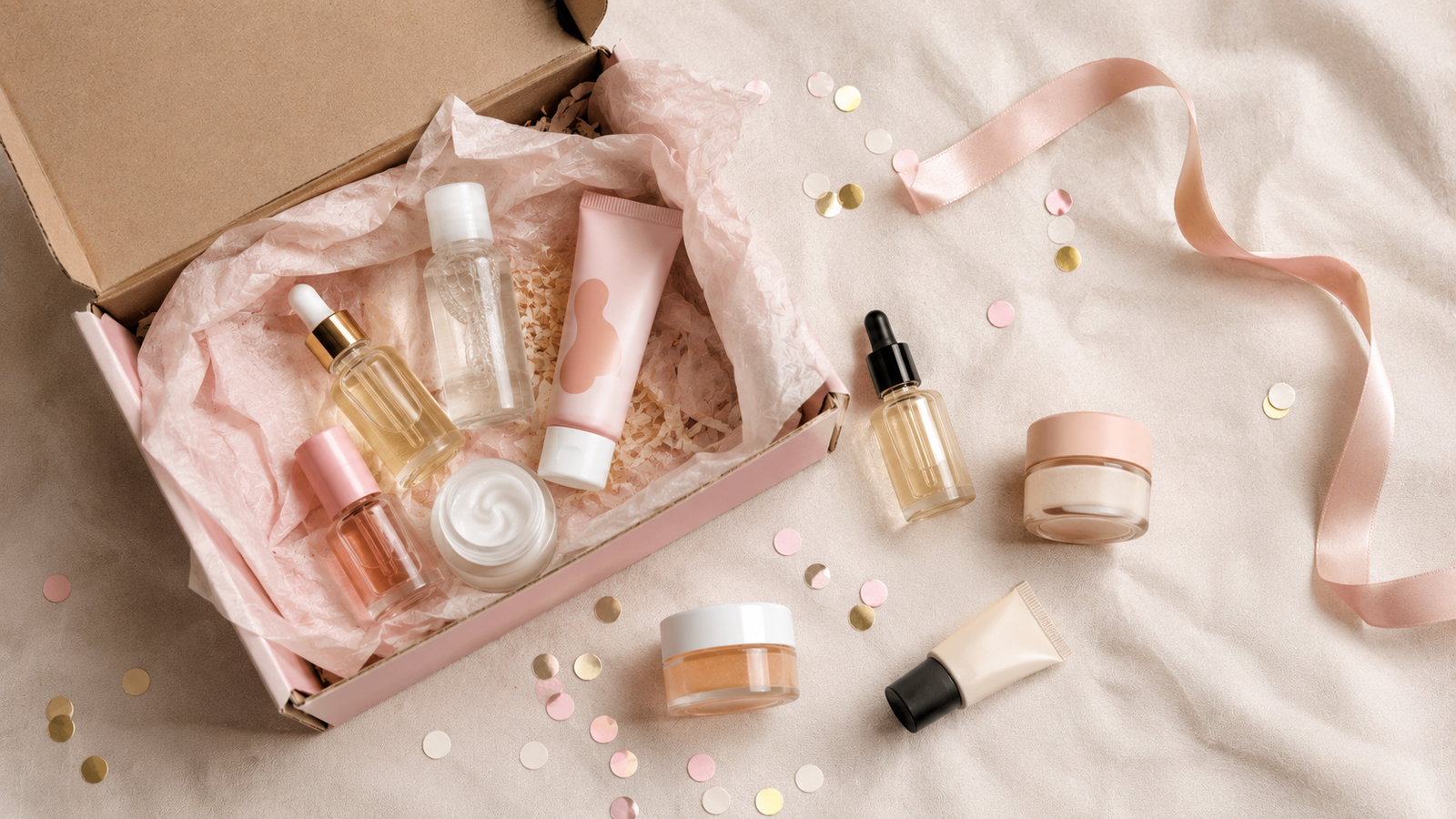
What beauty subscription boxes actually offer
A beauty subscription box delivers a recurring shipment of beauty products — typically 4 to 8 items — for a flat monthly fee usually ranging from $13 to $50. The promise is curation, discovery, and value: you pay less than retail for products selected to suit your preferences, often featuring brands or products you wouldn't otherwise try.
Subscription boxes generally fall into three categories:
Sample-based discovery boxes
Examples: Ipsy Glam Bag (basic tier), Birchbox, Glossybox. Lower price point ($13–$21/month), mostly sample-sized products, focused on letting you try things before committing to full sizes. Best for exploration; less satisfying if you want products you'll actually finish.
Full-size product boxes
Examples: Boxycharm, Allure Beauty Box, Ipsy Glam Bag Plus and Icon Box. Mid-range price point ($25–$60/month), mostly or entirely full-size products. Higher claimed value, sometimes genuinely good products you'll use, more expensive per box but more value per item.
Lifestyle and luxury boxes
Examples: FabFitFun, Causebox / Alltrue. Quarterly delivery ($50–$60/quarter), mix of beauty, wellness, home, and lifestyle items. Higher claimed value per box. Best for people who want variety beyond beauty.
The category you choose matters more than the specific box — these three types serve different needs.
The economic reality — value vs claims
Subscription boxes universally market on value claims: "$200 worth of products for $25!" or "5 full-size products at 80% off retail!" These claims need careful unpacking.
Inflated retail values
The "retail value" cited in marketing typically uses manufacturer suggested retail price (MSRP), which is often higher than what anyone actually pays. A product listed at $30 MSRP may sell at $20 with normal discounts and $15 on sale. Counting it as "$30 of value" overstates what you'd save by buying it conventionally.
Brand-supplied products at discounted cost
Subscription boxes pay deeply discounted bulk prices for products (often 20–40% of retail). Brands accept these because the box serves as paid marketing — getting their products into hands that might become repeat customers. The "value" the box advertises is closer to MSRP than to what they paid or what you'd pay at sale.
Variable hit rate
The real value question isn't "are these products worth the stated value?" — it's "how many of them will you actually use?" If a $25 box contains 5 items at $200 stated MSRP, but you'll only use 2 of them, the real value per item received is much lower.
The realistic value calculation
| Box claim | What it actually means |
|---|---|
| "$200 worth of products" | Sum of MSRPs; you'd actually pay ~$100–$140 retail |
| "$25 monthly box" | Brand cost to fulfill: roughly $8–$12 |
| "5 full-size products" | Could include lip glosses, eye creams, hair products — full-size doesn't mean what you'd buy |
| "Customized for you" | Algorithmically sorted from available inventory; not made-to-order |
| "Hit rate" | Typical user finds 2–3 of 5 products useful — boxes are honest if they admit this |
None of this makes subscription boxes bad. It just means the value math isn't what marketing suggests. The honest question is: do you enjoy the discovery and unboxing experience enough that you'd happily pay for it regardless of whether the math works out?
If you'd pay $20–$25 for an entertaining surprise-box experience that includes some products you'll use and some you'll donate or pass on, subscription boxes are reasonable. If you expect to receive $200 of products you'd genuinely choose, you'll be disappointed. The expectation gap drives most subscription box complaints.
The major boxes in 2026: a comparison
Ipsy
Price tiers: Glam Bag ($14/month, 5 products), Glam Bag Plus ($30/month, 5 full-size), Icon Box ($60/quarter, 8+ products)
Format: Algorithm-based personalization through beauty profile quiz
Best for: Discovery at lowest price point; those willing to deal with algorithm hits and misses
Caveats: Basic tier is heavily sample-based; cancellation requires going through account settings, sometimes with retention offers
Ipsy is the largest US-based beauty subscription box by subscriber count. The Glam Bag tier delivers sample-sized products in a reusable cosmetic bag for $14/month — useful as an entry point. The Glam Bag Plus and Icon Box tiers shift to full-size products at higher prices. Algorithmic curation means hit rate varies; many users report 2 of 5 products being matches in the Glam Bag tier.
Birchbox
Price: ~$17/month (5 samples)
Format: Editor-curated with limited personalization
Best for: People who trust editorial curation and want exposure to luxury brands
Caveats: Has had business turbulence in recent years; reliability of curation has varied
Birchbox pioneered the modern beauty subscription category in 2010. The model is editor-curated samples — less customization than Ipsy, but with more luxury-leaning brand selection. The brand changed ownership multiple times, which has affected consistency. Currently smaller scale than its peak but still operating.
Allure Beauty Box
Price: $25/month (full-size and deluxe samples curated by Allure editors)
Format: Fully editor-curated, identical box for all subscribers each month
Best for: Trust in Allure's editorial team; consistent quality preference over personalization
Caveats: No personalization — you get what they send
Allure Beauty Box uses the Condé Nast magazine's editorial team to curate boxes. Generally well-regarded for product quality. The lack of personalization is a feature, not a bug — if you trust Allure's taste, you don't need to fill out beauty profiles. Best perceived value among editor-curated boxes.
Boxycharm by Ipsy
Price: $25/month base tier, up to $60/month for premium tiers
Format: 5 full-size products with limited customization (you choose from preset options in some categories)
Best for: Highest claimed retail value per dollar; people who want full-size products
Caveats: Brand reputation has slipped slightly since the Ipsy acquisition; some users report changes in product quality
Boxycharm built its reputation on $150–$200 claimed value boxes for $25. The honest version of that math is closer to $60–$80 of actually-useful products, but that's still strong value for the price point. Since Ipsy acquired Boxycharm in 2020, some subscribers have noted shifts in brand selection. Still one of the stronger choices for full-size products at this price.
FabFitFun
Price: $54.99/quarter ($220/year), with annual plans at ~$200
Format: Quarterly delivery of 7–10 full-size items spanning beauty, wellness, and lifestyle
Best for: Variety beyond beauty alone; those who enjoy seasonal "moments"
Caveats: Less beauty-focused than other options; cancellation can require contacting customer service; some items are utility/lifestyle rather than premium beauty
FabFitFun is more of a lifestyle subscription than a beauty box. Quarterly boxes include skincare, makeup, wellness, home goods, fashion accessories, and sometimes electronics. Generous customization options compared to most competitors. Best for people who want a quarterly "moment" of variety rather than monthly beauty focus.
Glossybox
Price: ~$21/month for 5 products
Format: European-style premium curation, mostly samples with occasional full-size
Best for: Exposure to international brands not always available in the US
Caveats: Lower hit rate for US subscribers due to European brand bias
Glossybox is the European answer to Birchbox, with a more international brand mix. Strong if you want to discover Korean, Japanese, French, or German brands; less ideal if you want US-focused selection. The pink box itself has earned a small reputation for being collectable.
Lookfantastic Beauty Box
Price: ~$23/month, UK-based with international shipping
Format: European editorial curation, 6+ products
Best for: European brand discovery, particularly skincare
Caveats: International shipping adds time and sometimes cost
Lookfantastic's box has strong skincare focus and good European brand presence. Worth knowing about if you want a more skincare-leaning subscription experience.
Sample size matters — what you can and can't evaluate
One underappreciated limitation: many subscription box products are sample-sized, which limits what you can fairly evaluate.
By product category:
| Product type | Sample size effectiveness |
|---|---|
| Mascara, lipstick, lip gloss | Good — you can fully evaluate |
| Eyeshadow, blush, highlighter | Decent — samples often large enough |
| Hydrating serums, essences | Limited — too small to fairly evaluate |
| Anti-aging products (retinol, peptides) | Useless — these need 8–12 weeks of consistent use to evaluate |
| Cleansers and moisturizers | OK for sample sizes; full-size is better |
| Sunscreen | Limited — daily use exhausts samples in days |
| Fragrance | Sample vials are sufficient for testing |
| Hair products | Highly varied — single sachet often inadequate |
The implication: subscription boxes work best when sampling makeup and fragrance, less well for skincare actives that need extended use to evaluate. Boxes claiming to help you find your perfect skincare routine through samples are working against the biology of how skincare actives work.
The personalization problem
"Personalized for you" is the central marketing claim of most subscription boxes. The reality:
Algorithm matching vs true personalization
Boxes like Ipsy use algorithms to sort available inventory against your beauty profile. This means: of the products available to ship this month, the algorithm picks ones that statistically match users with profiles like yours. It does not mean: a custom selection made for you specifically. This distinction matters for hit rate.
Profile limitations
The beauty profile quizzes have to be short enough for users to actually complete them. They typically capture skin type, hair type, color preferences, and a few concerns. They miss: specific allergies, sensitivity history, products that didn't work, current routine, lifestyle factors, climate. The profile is a starting point, not a comprehensive picture of what suits you.
Inventory constraints
Even with perfect personalization, boxes can only send what they have. If they only have 8 lipsticks in their shipping rotation for the month and you don't wear lipstick, the algorithm has to choose one anyway. This drives the "I keep getting products I don't use" complaint.
What customization actually means
The boxes with the most genuine customization let you make active choices: pick from 2–3 product options in each category, swap an item you don't want, indicate brands or product types to skip. Boxycharm and FabFitFun offer the most of this. Birchbox and Allure Beauty Box offer almost none. Most users overestimate how much customization their box actually provides.
Hidden costs and cancellation gotchas
Beauty subscription boxes have evolved several common business practices worth understanding before you sign up:
Auto-renewal as default
Every major box auto-renews. The "first month for $1" or "free trial" offers transition to full price unless you cancel before the billing date. This is industry-standard and not deceptive in itself, but worth knowing.
Retention offers
Most boxes attempt to retain cancelling subscribers with discount offers (often 50% off your next month). These can be useful if you're on the fence; recognize them as retention strategy rather than a goodwill gesture.
Friction-laden cancellation
Several boxes require contacting customer service to cancel rather than allowing online self-service. This isn't always intentional friction (some legitimately want to offer retention), but it adds steps. The Federal Trade Commission has been increasing scrutiny on subscription cancellation policies in recent years.
Hidden subscriptions in "single purchase" offers
Some promotional offers that appear to be single purchases automatically enroll you in monthly subscriptions. Always read the cart and confirmation page carefully before checking out.
Shipping cost variation
International shipping costs can substantially affect value calculation. A box that's $25 in the US may be $35 with shipping in Canada, the UK, or India.
Before subscribing to any beauty box: (1) Read the cancellation policy specifically, (2) Note the cancellation deadline relative to your billing date, (3) Screenshot any "first month free" or "trial" terms, (4) Set a calendar reminder a week before your next billing date if you're trying it temporarily, (5) Check your credit card statement after the first month to confirm the expected charge. These five steps prevent the most common subscription regret patterns.
Beauty subscription boxes in India
The Indian beauty subscription market has grown substantially. The current major options:
Nykaa Beauty Box
Nykaa, India's largest beauty retailer, offers various subscription box options including their PRO Beauty Box. Strong domestic and international brand mix. Generally well-regarded for value within the Indian market.
FabBag
One of India's longest-running beauty subscription boxes. Monthly delivery with mix of skincare, makeup, and haircare. Mid-range pricing. Good for discovering Indian and international brands.
MyEnvy Box
India-focused beauty box with quarterly or monthly options. Tends to lean toward fragrance and luxury. Premium positioning compared to some competitors.
Sugar Cosmetics' Box
Sugar Cosmetics, an Indian makeup brand, offers occasional bundles and boxes featuring their own products. Less subscription-like and more bundle purchases.
International boxes shipping to India
Glossybox and Lookfantastic offer international shipping to India, but shipping costs can add 30–50% to the box price. Customs occasionally affects deliveries. Domestic Indian options are typically better value.
Who should and shouldn't subscribe
Subscription boxes work for:
- Beauty hobbyists who enjoy product discovery — finding new things is the point
- People without strong existing routines — exposure to options is genuinely useful
- Gift recipients — boxes make decent recurring gifts
- People who enjoy the unboxing experience as a small luxury — the experience itself is part of the value
- Those building their first beauty collection — variety helps you figure out preferences
- Travel-friendly options — sample sizes are convenient for travel
Subscription boxes don't work for:
- People with sensitive, reactive, or allergy-prone skin — too much exposure to unknown formulations
- Those with settled, effective routines — disruption isn't desired
- Strict value optimizers — the math rarely beats targeted purchases
- People who hate clutter — boxes accumulate products faster than you can use them
- Those with strong brand or formulation preferences — algorithms can't match your specific tastes
- People who want to address specific skin concerns — targeted products from research will serve you better
Better alternatives for what boxes promise
If subscription boxes appeal to you for specific reasons but the trade-offs don't work, alternatives:
For discovery and trying new things
Beauty retailer reward programs (Sephora Beauty Insider, Ulta Ultamate Rewards, Nykaa loyalty) offer point-based sample selections that let you choose what you try. Sephora's sample boutique and Ulta's similar offerings let you pick from current inventory.
For sample-sized luxury products
Sephora and Ulta both sell deluxe sample sets, often around holidays. These let you try multiple products from a brand without committing to full sizes — and you choose which brands.
For curation by editors you trust
Follow beauty editors and writers whose taste matches yours. Their seasonal "best of" lists give you curated discovery without the random algorithm.
For the unboxing experience without ongoing subscription
One-time gift boxes from retailers (often around holidays) provide the experience without monthly commitment. Many retailers offer multi-brand box promotions.
For value-per-dollar
Watch for sample-size gifts with purchase at department stores and beauty retailers. These often offer better value than subscription boxes — you get free samples when buying something you'd buy anyway.
The bottom line: Beauty subscription boxes are a legitimate category that suits some people genuinely well — particularly beauty hobbyists who enjoy discovery, don't have strict skin needs, and value the experience as part of the cost. The marketing claims about value typically overstate by 2-3x and personalization is more accurately "algorithmic sorting." Boxycharm and Allure Beauty Box offer the strongest value-per-dollar in the US market; FabFitFun is best for lifestyle variety; Ipsy Glam Bag is the lowest-cost entry point. In India, Nykaa Beauty Box and FabBag are the strongest domestic options. If you're considering subscribing, start with a single month, check the actual experience against your expectations, and only continue if it brings real enjoyment. The category works best when it's a pleasure, not when it's optimized for value.