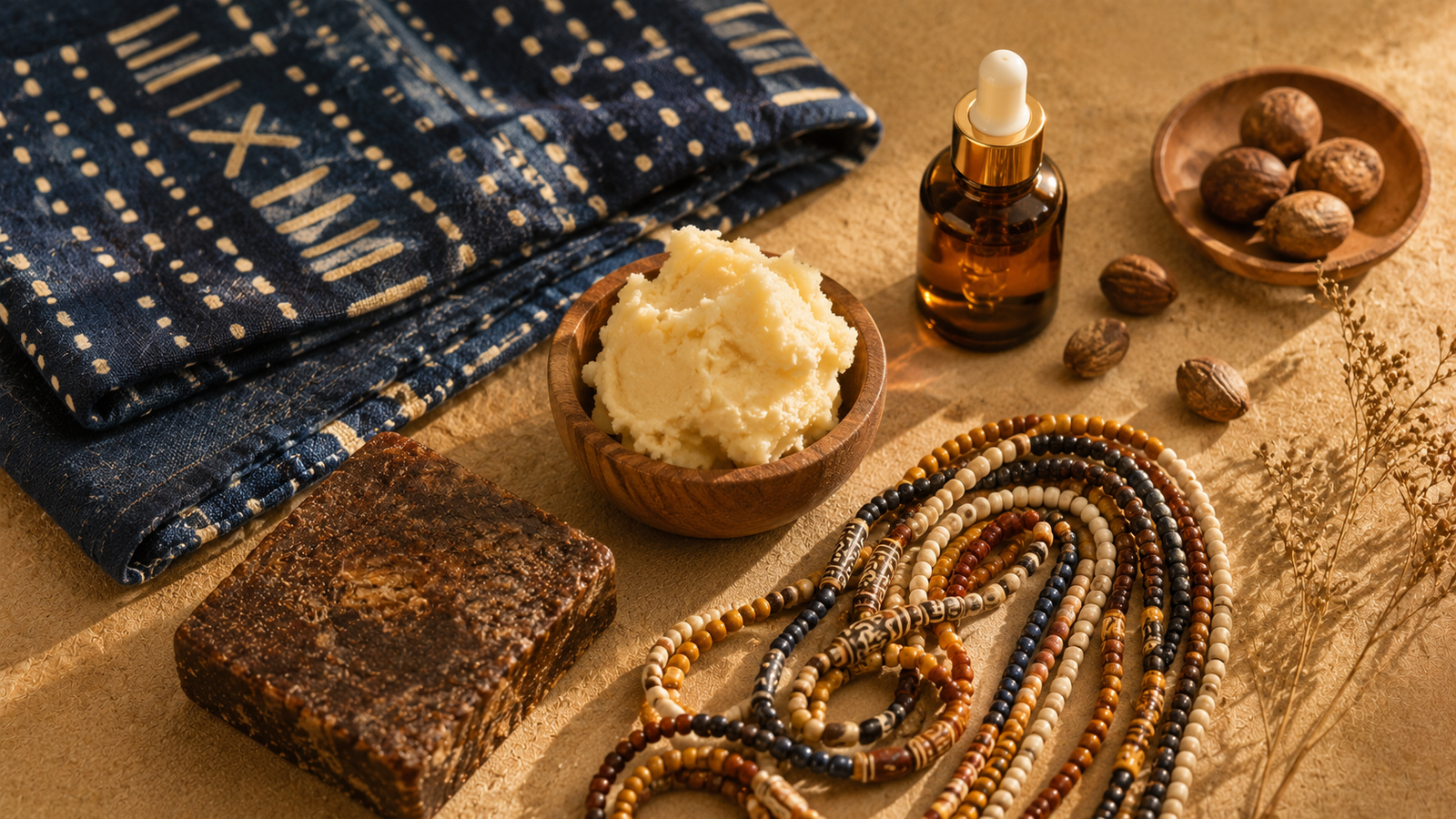
The diversity is the story
The single most important thing to understand about African beauty is that there is no "African beauty." There are hundreds of distinct beauty traditions across 54 countries, more than 2,000 living languages, and an extraordinary range of cultural, religious, and historical contexts.
This is not a rhetorical flourish. Treating "African beauty" as a single category does the same erasure work that treating "European beauty" as a single category would do — pretending that Ethiopian and Senegalese and Moroccan and Zulu and Igbo and Maasai aesthetic traditions are variations on a common theme rather than recognizing them as the distinct cultural achievements they are.
This piece accordingly works through the major regions of the continent — West, East, North, and Southern Africa — with brief treatment of specific cultural traditions within each. It then addresses the shared experience of colonial disruption that affected most of the continent, the diaspora movements that emerged in response, the natural hair movement, the contemporary African beauty industry, and the persistent tensions including the skin-bleaching crisis.
What follows is necessarily a survey. Each tradition mentioned deserves its own deep treatment that exceeds the scope of any single article. The goal here is to refuse homogenization while providing a starting framework for further exploration.
West African traditions
West Africa contains some of the world's most developed beauty cultures, with traditions stretching back over a thousand years in some cases.
Yoruba (Nigeria, Benin)
The Yoruba people of Nigeria and Benin have one of the most sophisticated beauty traditions in West Africa, deeply tied to the orisha religious tradition. Beauty (ewà) is associated particularly with Oshun, the orisha of fresh water, love, and beauty (see our piece on goddesses of beauty across cultures for more on Oshun).
Yoruba beauty practices include:
- Gele — elaborate head ties wrapped into sculptural shapes, particularly for celebrations
- Adire — indigo-dyed resist-pattern cloth, traditional Yoruba textile
- Aso ebi — coordinated family/group dress for celebrations
- Yellow and gold associations — Oshun's colors, used in jewelry and dress
- Body markings — historical facial scarification practices that identified family lineage and social position
- Hair braiding — elaborate traditional styles including didi, irun kiko, and many regional variants
Akan / Ashanti (Ghana)
The Akan-speaking peoples of Ghana, including the Ashanti, have developed beauty traditions tied to gold, kente cloth, and elaborate adornment.
Key elements:
- Kente cloth — woven strip cloth with specific patterns carrying named meanings, originally restricted to royalty
- Gold adornment — the Ashanti Kingdom controlled major gold sources; gold jewelry remains culturally significant
- Adinkra symbols — symbolic prints with specific meanings, used in textiles and adornment
- Hair sculpture — elaborate traditional hair styling that included shaving, threading, and sculptural arrangement
- Ceremonial dress — for naming ceremonies, weddings, and other significant occasions
Igbo (Nigeria)
The Igbo people of southeastern Nigeria have distinctive beauty traditions including:
- Uli — temporary body art applied with plant dyes, traditional women's practice
- Mgbidi — ceremonial hair styling for important occasions
- Coral bead jewelry — particularly significant in Igbo culture
- Specific bridal aesthetics involving coral, elaborate hair, and traditional dress
Wolof and Senegalese traditions
Senegal's Wolof, Sereer, and other peoples developed beauty traditions including:
- Intricate hair braiding — Senegalese braids have become internationally recognized as a distinctive technique
- Moussor — head ties similar to Yoruba gele but with distinct Senegalese styling
- Bazin — elaborate brocade textiles
- Body care traditions with shea butter, baobab oil, and other West African ingredients
Fulani / Fulbe traditions
The Fulani people, spread across the Sahel from Senegal to Sudan, have distinctive beauty traditions:
- Distinctive facial markings — historical practices for some Fulani groups
- Gold jewelry traditions — large hoops and elaborate pieces
- Specific hair patterns — distinctive Fulani braids that have influenced contemporary braiding globally
- Beauty contests — the Wodaabe Fulani's Gerewol ceremony is famous as one of the world's few traditional male beauty contests
East African traditions
Maasai (Kenya, Tanzania)
The Maasai have one of the most visually distinctive beauty traditions in East Africa.
Key elements:
- Beadwork — elaborate beaded collars, bracelets, and ear pieces with specific color meanings
- Shaved heads — for women in particular, a defining aesthetic feature
- Red ochre — used on hair and body for ceremonial purposes
- Ear stretching — elaborately stretched and decorated ears, particularly historically
- Shuka — distinctive red checked cloth, contemporary Maasai dress
- Specific body decoration for various ceremonial occasions
Ethiopian and Eritrean traditions (Habesha)
The Habesha peoples of Ethiopia and Eritrea have distinctive beauty traditions reflecting the region's long Christian, Jewish (Ethiopian Jewish/Beta Israel), and Islamic histories.
Key elements:
- Elaborate hair braiding — Albasso and Shuruba braids with specific cultural significance
- Telet (henna) — for weddings and celebrations
- Gold and silver jewelry traditions
- Specific bridal aesthetics including elaborate hair, traditional dress (habesha kemis), and silver crown ornaments
- Kohl eye decoration — common across the region
- Distinctive facial markings — historical Christian cross tattoos for some communities
Himba (Namibia, Angola)
The Himba people of northern Namibia and southern Angola have one of Africa's most visually distinctive beauty traditions.
Key elements:
- Otjize — a paste of butter fat and red ochre applied to skin and hair, giving the distinctive red appearance for which the Himba are known. Functions include sun protection, insect repellent, and aesthetic value
- Hairstyles signal life stage — children, young women, married women, and elders have specific distinctive hair arrangements
- Jewelry traditions — leather, copper, and shell
- Traditional dress — minimal cloth with elaborate jewelry adornment
Hamar (Ethiopia)
The Hamar people of southern Ethiopia have distinctive beauty traditions including:
- Goat fat and red ochre applied to hair and skin
- Elaborate hair styling with distinctive Hamar features
- Heavy beaded jewelry
- Body painting for ceremonial occasions
Mursi (Ethiopia)
The Mursi are known internationally for lip plates worn by some women, an elaborate beauty tradition that involves stretching the lower lip to insert decorative clay or wood plates. The practice has become controversial as outside tourism has shifted its cultural context; many younger Mursi women have stopped the practice, while others maintain it as cultural identity.
North African traditions
Berber / Amazigh
The Amazigh ("Berber") peoples across Morocco, Algeria, Tunisia, and Libya have distinctive beauty traditions predating the Arab arrival in North Africa.
Key elements:
- Traditional facial tattoos — historically common, particularly chin, forehead, and cheek markings with specific tribal and family meanings. The practice has declined significantly in recent generations
- Henna — elaborate Amazigh henna patterns distinct from those of other North African traditions
- Silver jewelry — distinctive Berber silver traditions, particularly from southern Morocco
- Kohl (also called "kohol") — eye decoration with specific Amazigh preparations
- Argan oil — long-used Moroccan beauty oil now globally famous
- Ghassoul clay — Moroccan volcanic clay used for skin and hair
Ancient Egyptian legacy
Ancient Egypt developed some of the world's most sophisticated cosmetic traditions, dating back over 4,000 years. While modern Egyptian beauty culture has changed dramatically, the ancient legacy continues to influence global beauty culture and Egyptian aesthetic identity.
Ancient Egyptian beauty practices included:
- Kohl — the elaborate kohl eye decoration of ancient Egypt influenced cosmetic practices across the ancient Mediterranean and continues today
- Henna — for hair and body decoration
- Perfumes and oils — Egyptian perfumes were renowned across the ancient world
- Specific cosmetic preparations — including red lip pigment, eye shadow in green and other colors
- Skin treatments — Cleopatra's milk baths are legendary; the underlying tradition of botanical and dairy skin treatments was real
Maghreb traditions (Morocco, Algeria, Tunisia)
The Maghreb region developed beauty traditions blending Berber/Amazigh, Arab, Sub-Saharan African, Andalusian, and later French colonial influences.
Key contemporary elements include:
- Hammam (traditional bath) culture — extensive skincare and grooming rituals
- Argan oil — Moroccan beauty product now global
- Black soap (savon noir) — traditional cleansing
- Ghassoul / Rhassoul clay — for skin and hair
- Elaborate bridal henna — distinctive Maghrebi patterns
- Specific perfume traditions
Southern African traditions
Zulu (South Africa)
The Zulu people of South Africa have developed elaborate beauty traditions.
Key elements:
- Beadwork — Zulu beadwork is some of the most elaborate in Africa, with specific color codes carrying meanings about marital status, age, and other identities
- Traditional hairstyles — including distinctive styles for different life stages and statuses
- Ochre body decoration for ceremonial occasions
- Specific bridal aesthetics involving elaborate beadwork, hair styling, and traditional cloth
- Isicholo — traditional married woman's headpiece
Xhosa (South Africa)
The Xhosa people, also of South Africa, have distinct beauty traditions including:
- Face painting with ochre and white clay — particularly for ceremonial occasions
- Distinctive beadwork patterns different from Zulu styles
- Specific traditional hairstyles
- Wedding aesthetics with traditional Xhosa dress and decoration
Ndebele (South Africa, Zimbabwe)
The Ndebele people are famous for elaborate body painting and beadwork.
Key elements:
- Brass and copper neck and arm rings — traditionally worn permanently by married women, an iconic visual feature of Ndebele aesthetics
- Geometric mural painting — extends to body and clothing decoration
- Elaborate beadwork with specific patterns carrying meanings
- Bright color palettes in textiles and adornment
San / Khoisan peoples
The San peoples of Southern Africa have developed beauty traditions adapted to desert and semi-desert environments:
- Specific body decoration practices
- Botanical skin treatments using local plants
- Distinct adornment with materials available in the environment
The colonial disruption and Black is Beautiful
The scale of colonial impact
European colonialism affected nearly the entire African continent and disrupted beauty traditions across regions. The specifics varied by colonial power (British, French, Portuguese, Belgian, German, Spanish, Italian) and by period, but common patterns included:
- Imposition of European beauty standards as markers of education and modernity
- Marginalization of traditional African aesthetics as "primitive" or "backward"
- Introduction of European cosmetics and skincare often unsuited to African skin
- Skin lightening preferences intensified by colonial economic structures
- Hair straightening pressure from European hair preferences
- Christian missionary critique of body modification practices (tattoos, scarification, etc.)
- Educational systems that taught European beauty standards as universal
The impact wasn't uniform — some traditions survived intact, others adapted, others were largely destroyed. But across the continent, colonial periods generally weakened traditional beauty practices and introduced European-influenced standards that continue to shape contemporary beauty culture.
Independence and aesthetic reclamation
The wave of African independence (roughly 1950s-1980s) brought new cultural movements. Pan-African aesthetics — embracing kente cloth, traditional adornment, natural hair, dark skin as beautiful — became part of post-independence cultural assertion.
Important figures included Kwame Nkrumah (Ghana's first president, who consciously promoted Ghanaian cultural aesthetics), Patrice Lumumba (Congolese independence leader), and many cultural figures across the continent. Music — highlife, Afrobeat, soukous, juju — became carriers of new aesthetic confidence.
The Black is Beautiful movement
In the United States, the Black is Beautiful movement emerged in the 1960s, particularly associated with the Black Power era. The movement explicitly challenged European beauty standards and asserted the beauty of natural Black hair, darker skin, and African-influenced aesthetics. The movement influenced fashion, music, advertising, and broader cultural representation.
Black is Beautiful had direct connections to African independence movements. Many African figures (Miriam Makeba's hair styles, the elaborate dress of various African political and cultural leaders) influenced and were influenced by American Black Power aesthetics. The diaspora movements operated in cultural conversation across the Atlantic.
The afro and its significance
The afro hairstyle, prominent in the late 1960s and 1970s, became one of the most visible aesthetic markers of Black is Beautiful. The style represented both natural Black hair texture and political stance — refusing chemical straightening to approximate European hair was an explicit cultural statement. Figures like Angela Davis, Diana Ross, and the Jackson 5 brought the afro into mainstream Black culture in ways that continued to shape Black aesthetic identity for decades.
The natural hair movement and global influence
The 2000s natural hair resurgence
From the early 2000s onward, a new natural hair movement emerged across Africa and the African diaspora. Drivers included:
- Health concerns about chemical relaxers — some research linked specific relaxer ingredients to health issues
- Cultural reclamation — embracing natural hair as cultural identity
- YouTube and social media — providing platforms for natural hair tutorials, product reviews, and community
- Growth of natural hair product markets — companies serving the natural hair community
- Workplace and educational acceptance battles — many places restricted natural hairstyles in ways increasingly recognized as discrimination
The CROWN Act and legal protections
In the United States, the CROWN Act (Creating a Respectful and Open World for Natural Hair) was first passed in California in 2019 and has since been adopted by many states. The legislation prohibits race-based hair discrimination in employment, education, and other contexts. Similar protections have spread internationally.
The legal protections reflect how persistent the discrimination has been. Natural hairstyles — afros, locs, braids, twists — have been treated as "unprofessional" in workplaces and "inappropriate" in schools in documented ways. The CROWN Act represents formal recognition that these treatments were race-based discrimination.
Global influence of African and diaspora hair styling
African and African diaspora hair styling techniques have become globally influential:
- Box braids, Senegalese braids, knotless braids, micro braids — techniques drawing on West African traditions
- Cornrows — across African traditions and the diaspora
- Locs / dreadlocks — drawing on multiple African and other traditions
- Bantu knots — Southern African origin
- Twists, twist outs — diaspora innovations
These techniques have spread globally and influenced beauty culture far beyond African and African-descended communities. Questions of cultural appropriation versus appreciation continue around their adoption by non-Black users.
Contemporary African beauty industry
The growth of African beauty brands
African and African diaspora beauty brands have grown substantially in recent years. Notable brands include:
- Shea Moisture — Founded by Liberian-American Richelieu Dennis, using traditional West African ingredients. Became one of the largest natural hair and skin brands in the US
- Iman Cosmetics — Founded by Somali-American model Iman in 1994, pioneering broad shade ranges for diverse skin tones
- Juvia's Place — Founded by Nigerian-American Chichi Eburu, known for vibrant eyeshadow palettes celebrating African color traditions
- Uoma Beauty — Founded by Nigerian-American Sharon Chuter, with extensive shade ranges and Afro-cultural design language
- Epara — Luxury African skincare founded by Nigerian-British Ozohu Adoh
- Black Opal — Cosmetics for diverse skin tones
- R&R Luxury — Ghana-based
- Suki Suki Naturals — South African
- Nubian Heritage — Natural ingredients with African traditional bases
Traditional African ingredients going global
Several traditional African beauty ingredients have become globally significant:
- Shea butter — From the karité tree, particularly Ghana, Burkina Faso, Mali. Now globally used in skincare and hair care.
- African black soap — Originating in Ghana and West Africa, traditionally made with plantain peel ash, palm oil, and other natural ingredients. Now globally distributed.
- Argan oil — Moroccan, from the argan tree found primarily in southwestern Morocco. Now a global luxury beauty ingredient.
- Marula oil — From the marula tree, traditional Southern African ingredient now widely used in skincare.
- Baobab oil — From the baobab tree across the African savanna, used for skin and hair.
- Mongongo oil — Southern African origin, used for hair.
- Tamanu oil — Originating from various tropical regions including parts of Africa.
Diaspora innovation and influence
The African diaspora — including African Americans, Afro-Caribbean communities, Afro-Latin Americans, and African diaspora in Europe — has been a major force shaping global Black beauty culture. The combination of African traditional knowledge with diaspora innovation has produced distinctive contemporary beauty culture.
Increasing recognition in mainstream beauty industry
The 2017 launch of Fenty Beauty by Rihanna — with its initial 40-shade foundation range — became a watershed moment in mainstream beauty industry recognition of darker skin tones. The "Fenty effect" pushed established brands to expand shade ranges. Whether this represents fundamental change or marketing response remains debated, but the visible diversity of beauty industry product offerings has changed substantially in the years since.
The honest tensions: bleaching, recognition, identity
The skin-bleaching crisis
The most serious tension in contemporary African beauty culture is the skin-bleaching crisis. Skin-bleaching products are widely used in many African countries — Nigeria, Ghana, Togo, Senegal, Tanzania, and others have particularly high rates of use. The products often contain dangerous ingredients including high-concentration hydroquinone, mercury, and steroids that cause:
- Skin barrier damage and increased sensitivity
- Hyperpigmentation paradoxically worsened over time
- Kidney damage from steroid and mercury absorption
- Increased skin cancer risk
- Hormonal disruption
Multiple African governments have banned specific bleaching ingredients with mixed enforcement success. The market continues because the underlying preferences haven't shifted — colorism remains structurally embedded in marriage markets, employment, and social mobility in ways that create economic incentive for risky products.
The honest framing acknowledges this is a serious public health and cultural crisis, not just a personal choice issue.
The recognition problem
African beauty traditions remain under-recognized globally. Most international beauty publications cover "African beauty" only in limited ways — usually focused on a few prominent African American or African celebrities, or briefly mentioning "African ingredients" without engaging the underlying traditions. The hundreds of distinct beauty traditions across the continent get systematically less coverage than would be proportionate to their depth and diversity.
This is partly a publishing economy issue (most beauty media is based in the US, UK, France, or Asia) and partly the broader pattern of African cultural achievements receiving less global attention than they deserve.
The diaspora-continent dynamic
Tensions sometimes exist between African diaspora beauty culture and continental African beauty culture. Diaspora communities have sometimes been criticized for representing "African" beauty in ways shaped more by American or European media frameworks than by continental African traditions. African beauty brands operating internationally sometimes face questions about how authentically they represent the traditions they reference.
This is the kind of internal cultural conversation that doesn't reduce to simple answers. Diaspora and continental African beauty cultures are genuinely related and genuinely distinct; both are legitimate inheritors of African traditions; the tensions reflect real differences in experience.
The internal diversity within Africa
Within African countries, regional and ethnic diversity creates internal beauty politics. South Africa's various ethnic beauty traditions (Zulu, Xhosa, Sotho, others) coexist not always harmoniously. Nigeria's Yoruba, Igbo, Hausa, and other traditions sometimes compete for cultural primacy. Ethiopia's various peoples have distinct traditions that interact within national beauty culture. The "African beauty" homogenization happens within countries too.
The honest position
Contemporary African beauty culture is in genuine reform transition with real progress against persistent issues. The natural hair movement has gained substantial ground. New African beauty brands are growing. Recognition of African beauty traditions in global beauty culture has improved. But the skin-bleaching crisis continues, structural colorism remains embedded, and the dominant beauty industry still allocates attention disproportionately.
The bottom line: There is no single "African beauty standard." Africa contains 54 countries and hundreds of distinct beauty traditions — Yoruba gele and Oshun-inspired adornment, Akan gold and kente, Maasai beadwork and red ochre, Ethiopian elaborate braiding, Berber tattoos and henna, Zulu beadwork, Ndebele body painting, Himba otjize, and many others. European colonialism disrupted these traditions across most of the continent, imposing European standards that continue to shape contemporary culture. The Black is Beautiful movement (1960s-70s), the natural hair movement (2000s onward), and emerging African beauty brands (Shea Moisture, Iman, Juvia's Place, Uoma, Epara, and many others) push back. The CROWN Act in the US provides legal protection against hair-based discrimination. The Fenty Beauty 2017 launch and "Fenty effect" expanded mainstream beauty industry shade ranges. But the skin-bleaching crisis remains serious in many African markets, structural colorism continues, and the depth of African beauty traditions remains under-recognized globally. The honest treatment refuses both the homogenization that treats "African beauty" as one thing and the dismissal that treats it as merely peripheral to mainstream beauty culture. The traditions are remarkable in depth and variety; the contemporary reform work is real and ongoing.