The growth phase: what to expect
Growing a beard isn't a single event — it's a 2–4 month journey through several distinct phases. Knowing what's coming makes it much easier to push through the awkward weeks instead of giving up.
Weeks 1–2: Stubble (the easy part)
Looks intentional from day one. Some men stop here, and that's fine — short stubble is a legitimate look. If you're going further, the next phase is harder.
Weeks 2–4: Patchy phase (the part that breaks most men)
Hair grows in unevenly. Some patches are denser than others. The whole thing looks scruffy rather than intentional. This is when most men give up — and it's a mistake. Most patchiness fills in by week 6, especially in the cheeks and corners of the mouth.
Push through. Use beard oil to manage itch. Don't trim during this phase; let everything grow.
Weeks 4–8: Filling in
The patches start connecting. The beard begins to look like an actual beard rather than enthusiastic stubble. Hair texture often softens during this phase.
Weeks 8–12: Forming the shape
By around week 8, you can start defining the beard's edges — the cheek line, the neck line, mustache shaping. This is when a beard goes from "I'm growing a beard" to "I have a beard."
Months 3–6: Length and density
If you keep going, the beard becomes longer and denser through this period. Hair grows about half an inch per month, so a 6-month-old beard is roughly 3 inches long.
The "patchy phase" is universal. Even men who eventually grow thick beards go through it. The difference between men with great beards and men who never have one isn't usually genetics — it's whether they pushed through weeks 2–4 instead of shaving in frustration.
Why genetics determine most of it
Here's the part most beard growth content avoids saying clearly: your maximum beard potential is roughly 80% genetic. No amount of products, supplements, or routines will dramatically exceed what your DNA allows.
What genetics control:
- Total density of facial hair follicles (set at puberty)
- Whether your follicles produce thick terminal hair or fine vellus hair
- Where on your face hair grows (cheeks, neck, jaw, mustache area)
- Color and texture of beard hair
- Maximum length your hair can reach (terminal length)
What you can actually influence:
- Whether existing follicles produce their best possible hair (with adequate nutrition, sleep, hormones)
- How healthy and presentable the beard you can grow looks
- Maintenance, trimming, and shaping
- Whether dormant follicles activate (somewhat — through minoxidil specifically)
This isn't pessimism — it's freedom. Once you accept that you can't dramatically change your beard genetics, you can focus on making the most of what you can grow. A well-maintained moderate beard looks dramatically better than a neglected attempt at a thick one.
Be skeptical of any "beard growth supplement" or "beard growth oil." Biotin gummies, "growth serums," and proprietary blends have essentially zero clinical evidence for stimulating new beard hair. The supplement industry profits from selling hope. Save the money for quality basic products instead.
Your daily beard care routine
Once you have a beard worth caring for, the routine is genuinely simple. Five minutes a day, total.
Morning
- Rinse beard with lukewarm water in the shower. Don't use shampoo daily — it's too harsh.
- Pat dry gently with a towel. Don't rub vigorously, which causes split ends.
- Apply 3–5 drops of beard oil to the palm. Rub between hands, then work from beard tips upward into the skin underneath.
- Comb through with a wooden or horn beard comb to distribute the oil evenly and detangle. Plastic combs cause static and snag.
Evening (optional but helpful)
- Rinse with cool water after the day's exposure.
- Apply 2–3 more drops of beard oil if your skin is dry or itchy.
2–3 times per week (wash days)
- Wet beard thoroughly in the shower.
- Apply beard wash or a gentle face cleanser — never regular hair shampoo, which is too stripping.
- Massage into the beard and skin underneath for 30–60 seconds.
- Rinse thoroughly — residue causes itchiness and dandruff.
- Apply beard conditioner if your beard is over 2 inches.
- Towel-dry, then apply beard oil to damp beard — locks in moisture better than dry application.
Apply beard oil while your beard is slightly damp, not soaking wet or fully dry. Damp hair absorbs oil better and the oil distributes more evenly. The same logic that applies to hair conditioner applies to beard oil.
The products that actually matter
You don't need the 12-piece beard care kit. The honest list of what's worth buying:
Essential
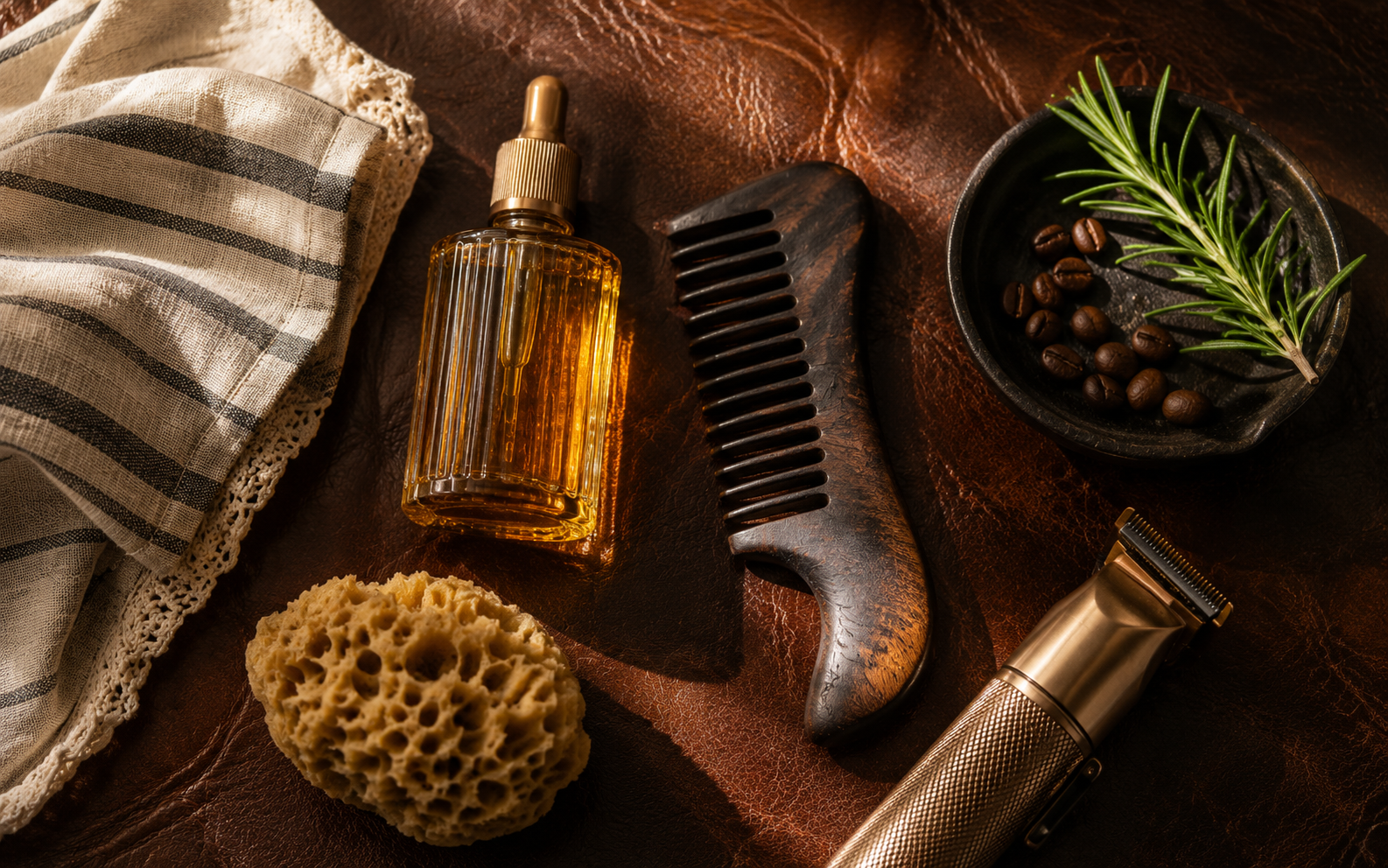
Beard oil
The single most useful beard product. Moisturizes the skin underneath the beard, softens the hair, reduces itch, and adds a subtle shine.
Look for: simple ingredients — jojoba oil, argan oil, sweet almond oil, vitamin E. Avoid heavy oils like coconut oil (clogs facial pores in some men).
Apply daily: 3–5 drops for short beards, 5–8 drops for longer ones.
Cost: $15–30 for a 2-month supply.
Beard wash (or gentle face cleanser)
You don't need a beard-specific wash, despite the marketing. A sulfate-free face cleanser works just as well. The key is gentle — not stripping.
Skip: regular hair shampoo (too harsh), bar soap (too high pH), "anti-itch" beard washes with harsh ingredients.
Cost: $10–20 for a 2-month supply.
Wooden or horn beard comb
Plastic combs cause static, snag hair, and create split ends. Wood and horn combs glide more smoothly through beard hair.
Look for: hand-cut, smooth-edged combs. Sandalwood and pearwood are common materials.
Cost: $10–25 — buy once, use for years.
Quality beard trimmer
Doesn't need to be expensive. A reliable cordless trimmer with adjustable length settings is enough.
Look for: good battery life, multiple length combs, washable head, brand reputation for blade longevity.
Cost: $30–80 for solid mid-range options. The $200+ premium trimmers offer marginal real benefits.
Useful for longer beards (3+ inches)
Beard balm
Slightly heavier than oil with added wax for light hold and shape. Useful when your beard is long enough to need taming.
Beard butter
The heaviest conditioner option. Useful for very dry skin under the beard or for taming coarse, thick beards.
Boar bristle brush
Once a beard reaches 3+ inches, a boar bristle brush works better than a comb for daily styling. Distributes oils more evenly and trains beard hair to grow in your preferred direction.
Skip these
- "Beard growth oils" — same ingredients as regular beard oil, marketed differently. They don't grow beard.
- Beard supplements — biotin gummies, "beard vitamins" — no good evidence of growth benefit unless deficient.
- Hair shampoo on the beard — too harsh, dries out facial skin.
- "Beard shaping templates" — once you know the basics of cheek and neck line shaping, these are unnecessary.
Trimming and shaping for any length
The single biggest difference between a great-looking beard and a scruffy one is consistent trimming. Even short beards need attention every 1–2 weeks.
The neck line
The most important line on any beard. Done wrong, even a great beard looks unfinished.
How to find it: tilt your head back. The natural neck line is roughly two finger-widths above your Adam's apple, curving up toward each ear. Don't go too high — a neck line that's too high makes the beard look like it's floating off your face.
How to maintain it: shave clean below the line every 3–5 days with a regular razor. Don't let stubble accumulate below — it ruins the silhouette.
The cheek line
The line where your beard meets your cheekbones. Generally let your natural growth pattern guide this — don't force a higher line if your hair doesn't grow there naturally.
Light maintenance: every 1–2 weeks, trim stray hairs that grow above the natural line. Don't aggressively shape — natural cheek lines look better than over-engineered ones.
Length trimming
Once your beard is the length you want, maintain it with regular trimming.
Process:
- Wash and air-dry beard fully
- Comb downward to lay hair flat
- Use trimmer with appropriate length comb (start longer than you think you want)
- Trim against the direction of growth in slow, careful passes
- Comb again, check for unevenness, trim more carefully if needed
The rule: always trim less than you think you need. You can always remove more — you can't put hair back.
Mustache shaping
The mustache often grows over the upper lip, becoming uncomfortable and trapping food. Trim regularly.
How: comb mustache hair downward over the upper lip. Use sharp scissors to trim straight along the lip line. For more shape, use a smaller trimmer or angle the scissors slightly.
Common beard problems and fixes
| Problem | Likely cause | Fix |
|---|---|---|
| Beard itch (early growth) | Skin adjusting to longer hairs | Apply beard oil twice daily; resolves by week 4 |
| Beard itch (mature beard) | Dry skin underneath | Wash less often, increase beard oil, exfoliate underneath weekly |
| Beard dandruff (beardruff) | Dry or irritated skin shedding | Switch to gentler wash, apply oil daily, consider anti-dandruff face wash twice weekly |
| Patchy growth | Genetics or immature follicles | Push through weeks 2–4; if still patchy at 8 weeks, work with what fills in or try minoxidil |
| Split ends | Dryness, harsh products, friction | Reduce shampooing, increase oiling, sleep on silk pillowcase, trim regularly |
| Wiry, coarse texture | Naturally coarse hair, dehydration | Beard butter (not just oil), weekly conditioner, trim frequently |
| Ingrown hairs at edges | Curly hair growing back into skin | Don't shave too close at the cheek line; gentle exfoliation 2x weekly; salicylic acid wash for affected areas |
| Uneven length | Different growth rates by area | Trim to match the slowest-growing area; this evens out the visual length |
| Beard going gray patchily | Normal aging — usually genetic | Embrace it, or use beard dye (test on a small area first) |
Minoxidil for beard growth
Worth a separate section because it's the only treatment with any real evidence for stimulating beard growth — and the marketing around it is heavy on both sides (overhyped and unfairly dismissed).
What the evidence shows
Topical minoxidil 5% applied twice daily has shown meaningful beard growth in some men in small studies, particularly those whose beard follicles haven't fully matured. It's the same medication used for scalp hair loss — applied off-label to the beard area.
Results vary dramatically:
- Some men see significant new beard growth in 6–12 months
- Some see modest improvement in patchy areas
- Some see no response at all
The men who respond best tend to be those whose facial follicles haven't fully terminalized yet — typically late teens to early 30s. Older men with truly empty beard areas (not just patchy) generally see less benefit.
How it works
Minoxidil opens potassium channels in skin cells, increasing blood flow to follicles and prolonging the growth phase of hair. For beard hair specifically, the proposed mechanism is helping vellus (peach fuzz) follicles convert into terminal (full beard) follicles.
How to use it
- Apply 1 mL of 5% minoxidil twice daily to clean, dry beard area
- Allow at least 4 hours absorption before washing the area
- Expect 6+ months before judging results
- Initial shedding (weeks 2–6) is normal
- Once you stop, gains may revert over 3–6 months — though many users report partial retention
Side effects to know
- Skin irritation, dryness, or itching at application site (most common)
- Increased heart rate in some users (rare with topical use, but possible)
- Unwanted hair growth on cheeks beyond the beard area (rare — apply carefully)
- Dizziness or low blood pressure (very rare with topical use)
Minoxidil is FDA-approved for scalp hair loss but used off-label for beard growth. The evidence is real but not as strong as it is for scalp hair. Talk to a doctor before starting if you have any heart, skin, or medication concerns. Don't buy unregulated minoxidil from sketchy online sources — counterfeit products are common.
Beard care by length
Stubble to short beard (under 1 inch)
Routine: wash 2–3x weekly, beard oil daily, trim weekly.
Tools needed: beard wash, beard oil, beard trimmer.
Common issue: itch — beard oil resolves it.
Medium beard (1–3 inches)
Routine: wash 2–3x weekly, beard oil daily, beard balm 2–3x weekly for shape, comb daily, trim every 2 weeks.
Tools needed: beard wash, beard oil, beard balm, beard comb, trimmer.
Common issue: shape going wild — regular trimming and balm fix it.
Long beard (3–6 inches)
Routine: wash 2x weekly, beard oil + balm daily, conditioner weekly, brush daily with boar bristle, trim every 3–4 weeks.
Tools needed: beard wash, beard conditioner, beard oil, beard balm, beard butter, boar bristle brush, trimmer, sharp scissors for detail work.
Common issue: tangles and dryness — leave-in conditioner and weekly deep treatment help.
Very long beard (6+ inches)
Routine: wash 1–2x weekly, daily oil + balm, weekly butter treatment, sleep with beard tucked into pillow or in a beard sleeve, trim every 4–6 weeks for split ends only.
Common issue: daily maintenance becomes significant. Some men love the ritual; others get tired of it. Be honest about your tolerance.
Common mistakes to avoid
- Quitting during the patchy phase. Most beards look bad in weeks 2–4. Push through to week 6 before judging.
- Using regular shampoo on the beard. Too stripping. Use beard wash or a gentle face cleanser.
- Trimming too aggressively when first shaping. Always trim less than you think — you can't put hair back.
- Setting the neck line too high. A neck line above the Adam's apple looks unnatural. Two fingers above is the rule.
- Over-shaping the cheek line. Most men's natural cheek lines look better than aggressively-shaped ones. Light maintenance only.
- Skipping beard oil because your beard is short. Even at week 1, beard oil reduces itch and moisturizes the skin.
- Using a plastic comb. Static, snags, split ends. Switch to wood or horn.
- Not training the beard. Daily combing/brushing in your preferred direction trains the hairs over time. The beard you have at month 6 partially reflects how you trained it.
- Buying expensive starter kits. $150 beard kits sell hope, not better beards. A $40 setup of beard oil, wash, comb, and trimmer covers everything most men need.
- Ignoring the skin underneath. The beard hair gets attention; the skin underneath is forgotten until it's flaking. Apply oil and exfoliate the skin under the beard regularly.
The bottom line: A great beard is mostly genetics plus consistent care. Wash gently, oil daily, comb regularly, trim deliberately. The four-product setup (oil, wash, comb, trimmer) handles 95% of men's beard needs. Skip supplements, "growth oils," and 12-piece kits. Push through the awkward weeks. Work with what your DNA gives you, not against it. The men with great beards aren't winning a genetic lottery — they're just maintaining what they can grow.