What vitamin C actually does for skin
Vitamin C is one of the most-studied antioxidants in skincare. The research is genuinely strong: when applied topically at the right concentration and pH, it does three things measurably well.
It brightens skin and fades dark spots by inhibiting tyrosinase, the enzyme your skin uses to make melanin. Over 8–12 weeks of consistent use, post-acne marks, sun spots, and uneven tone visibly fade.
It boosts collagen production. Vitamin C is a required cofactor for two enzymes that synthesize collagen. Topical use modestly increases collagen density in the dermis, which translates to firmer skin over months of use.
It neutralizes free radicals from UV and pollution. Used under sunscreen, vitamin C provides a second layer of antioxidant defense — it doesn't replace SPF, but it amplifies its effect.
Which form of vitamin C should you use
Vitamin C comes in several forms on ingredient labels. They aren't equivalent.
| Form | Strength | Best for |
|---|---|---|
| L-ascorbic acid | Strongest, most studied | Most users; fastest visible results |
| Magnesium ascorbyl phosphate | Gentler, more stable | Sensitive skin; pregnancy |
| Sodium ascorbyl phosphate | Gentle, helps acne | Acne-prone, sensitive skin |
| Tetrahexyldecyl ascorbate | Oil-soluble, very stable | Dry skin; layering with oils |
| Ascorbyl glucoside | Mildest, slow-acting | Very sensitive or reactive skin |
If your skin tolerates it, L-ascorbic acid at 10–20% concentration gives the strongest results. If you're sensitive or new to actives, start with one of the derivatives — they take longer to show results but are far less likely to irritate.
Vitamin C concentrations above 20% don't increase effectiveness — they only increase irritation. If a brand is marketing 30%+ vitamin C, that's a marketing claim, not a skincare benefit.
When and how to apply vitamin C
Apply vitamin C in the morning. Two reasons: first, its antioxidant action complements sunscreen during the day. Second, light and air degrade vitamin C, so morning use means you're applying it fresh.
- Cleanse and pat skin completely dry
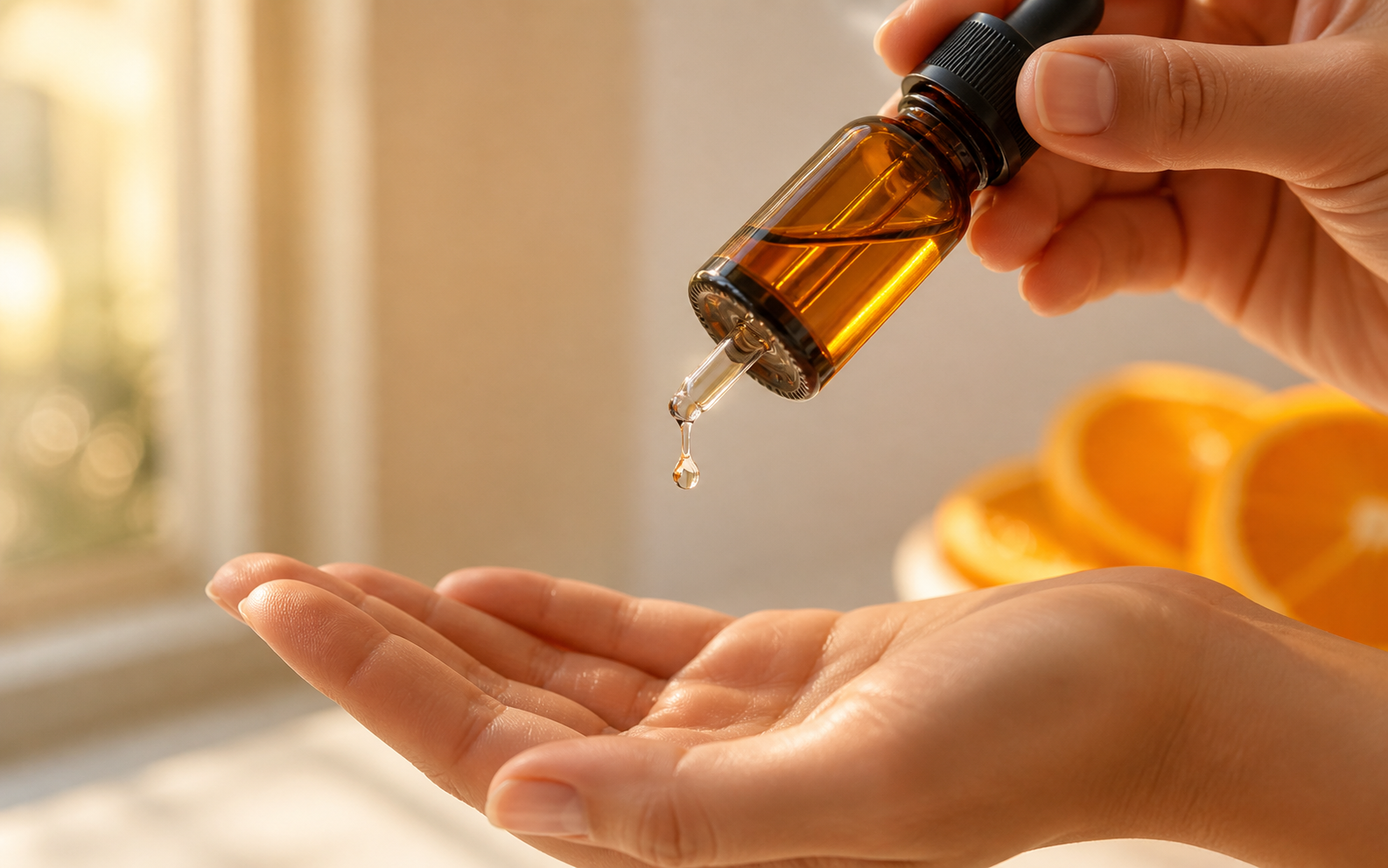
- Apply 3–5 drops of vitamin C serum to fingertips
- Press into face and neck — don't rub aggressively
- Wait 60–90 seconds for it to absorb
- Follow with moisturizer, then SPF 30+
You'll feel a slight tingle the first few times you use it. Mild tingling is normal and stops within a few weeks. Stinging, redness, or burning is not normal and means the formulation is too strong for your skin.
How to introduce vitamin C without irritation
Most vitamin C reactions come from doing too much, too fast. The slow approach works better:
- Week 1: Apply 3 mornings per week (Mon/Wed/Fri)
- Week 2: Apply 4 mornings per week
- Week 3–4: Apply 5–6 mornings per week
- Week 5+: Daily, if your skin tolerates it
If you experience persistent redness, breakouts, or stinging, drop back one week. There's no rush — vitamin C builds visible results over months, not days.
Storage, shelf life, and oxidation
Vitamin C is unstable. It oxidizes when exposed to air, light, and heat — and oxidized vitamin C is not just ineffective, it can cause irritation.
Signs your vitamin C has oxidized:
- The color has shifted from clear or pale yellow to dark orange or brown
- The texture has thickened or separated
- It smells different (often metallic or sour)
If any of these happen, throw it out. Continuing to use it will not give you the benefits — and may cause more pigmentation.
Store vitamin C in a cool, dark place — not the bathroom (humidity speeds oxidation). A drawer or even the fridge extends shelf life. Once opened, most vitamin C serums stay potent for 3 months. Buy smaller bottles you'll actually finish.
What to pair (and not pair) with vitamin C
Pairs well with: Vitamin E and ferulic acid — these stabilize vitamin C and amplify its antioxidant effect. Many of the best vitamin C serums combine all three.
Pairs well with: Sunscreen. Vitamin C plus SPF is one of the strongest combinations in anti-aging skincare.
Be cautious with: Niacinamide. Old advice said you couldn't combine them; newer research shows that's mostly a myth. But if you have very sensitive skin, separate them by routine (vitamin C in the morning, niacinamide at night) just to be safe.
Don't combine on the same morning: Vitamin C and AHAs/BHAs (glycolic, salicylic acid). The combined acidity can compromise your barrier. Use vitamin C in the morning, exfoliating acids at night.
Don't combine on the same morning: Vitamin C and benzoyl peroxide. They oxidize each other. If you use both, separate them by routine.
The bottom line: Vitamin C is one of the highest-impact skincare ingredients available, but only if you use the right form, store it correctly, introduce it slowly, and apply it in the morning under SPF. Get those four things right, and you'll see real results in 8–12 weeks.