The honest framing for beauty tips
Beauty tip articles are a defining genre of beauty media. The typical version lists 30–50 tips, mixes useful information with fluff, repeats common knowledge as if revelatory, and rarely admits that most of the tips don't actually matter much compared to a handful of basics.
This article does something different. It lists the basics that genuinely move the needle, admits there aren't that many of them, and is honest about which popular tips are useless or harmful.
The reality: if you do six things consistently, your skin and overall presentation will improve more than if you do thirty things inconsistently. The challenge in beauty isn't finding more tips — it's identifying the small number that matter and actually doing them. Tip overwhelm is itself a barrier to results.
The single most important tip
If you only ever follow one beauty tip in your entire life, follow this:
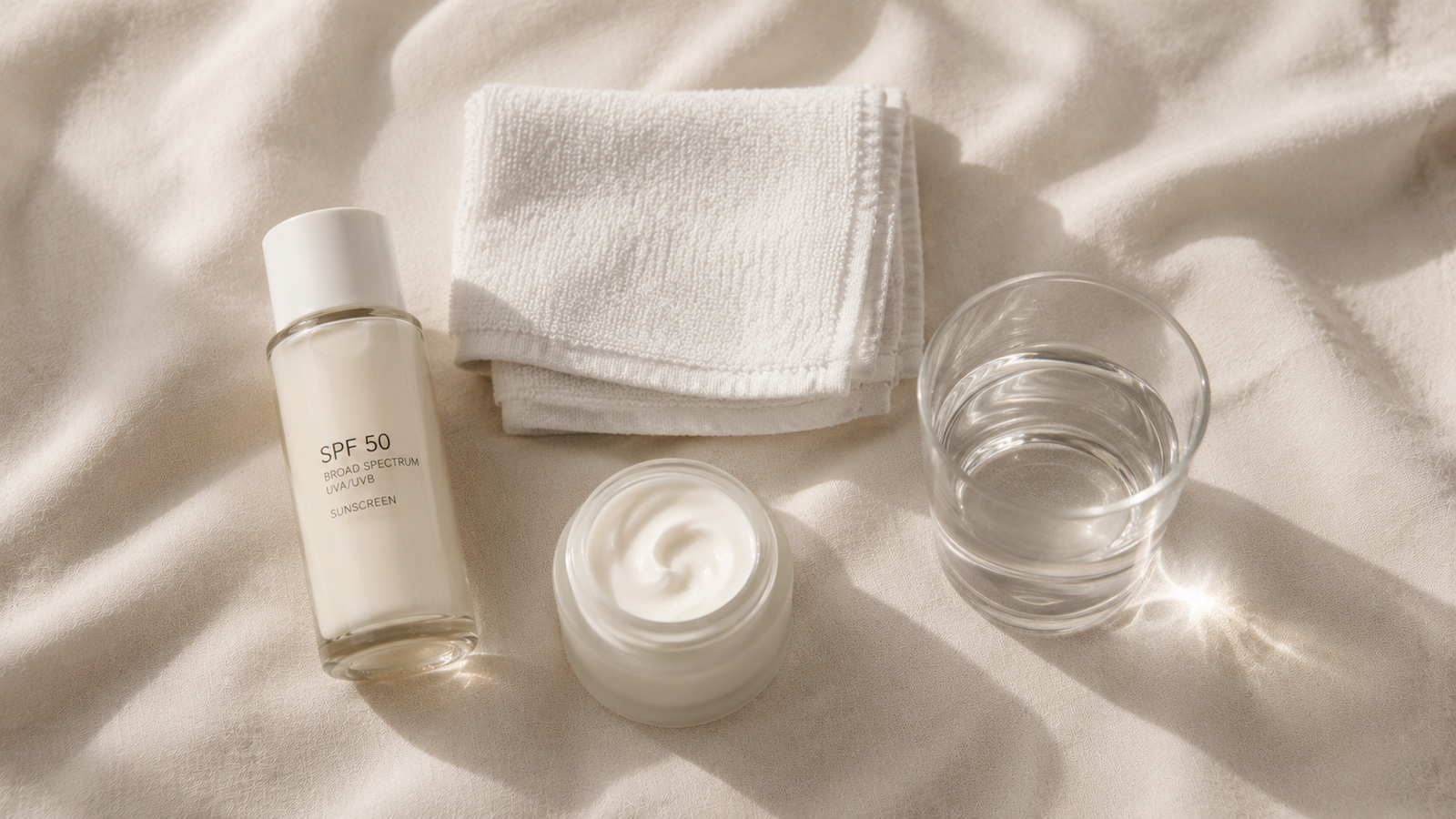
Wear broad-spectrum SPF 30+ sunscreen on your face, neck, chest, and the backs of your hands every single day, year-round.
This isn't just a tip — it's the foundation of everything else. Here's why:
- UV exposure causes 80–90% of visible skin aging
- UV exposure causes most hyperpigmentation, age spots, and uneven skin tone
- UV is the single most important risk factor for skin cancers
- UV damage accumulates from cloudy days, indoor exposure through windows, and walking from car to office
- Nothing else you do for your skin can compete with what UV is undoing
The honest framing: most people who feel their skin "isn't responding" to skincare products are quietly undoing every product's benefit through inconsistent or absent SPF use. The serums, masks, treatments, and elaborate routines accomplish less than what daily sunscreen alone would deliver.
People who add daily SPF to an otherwise basic skincare routine consistently see more visible improvement within 6 months than people who add expensive treatments to a routine without consistent SPF. This is the single highest-leverage habit in skincare, and it's also the one most consistently underdone.
Skincare tips worth following
Beyond the SPF foundation, these tips genuinely matter:
Cleanse gently, twice a day at most
Most people over-cleanse. Use lukewarm water (not hot), a gentle cleanser, and your fingertips (not washcloths or brushes for daily use). Cleanse evening to remove the day; morning is optional for some skin types — a water rinse may be sufficient.
Pat dry, don't rub
After washing, pat skin dry with a soft towel. Rubbing causes mechanical irritation and contributes to fine lines over years.
Apply skincare to slightly damp skin
Skincare absorbs better when skin is still slightly damp from cleansing. The window is short — apply your hydrating products within 60 seconds of patting dry for best results.
Use minimum products, not maximum
A simple effective routine (cleanser + 1 active + moisturizer + SPF morning, cleanser + 1 active + moisturizer night) outperforms elaborate 10-step routines for most people. Adding more products doesn't add proportionally to results.
Patch test new products
Apply a small amount to your inner forearm for 2–3 days before applying to your face. Even "gentle" products can cause allergic reactions in specific individuals.
Give new products 8–12 weeks before judging
Skincare works on biological timescales (skin cell turnover is roughly 28 days). Hydrators show effects in days; brightening serums in 6–12 weeks; retinol in 12 weeks; collagen-stimulating products in 6 months. Quitting after two weeks gives you no real information.
Track changes via photos, not memory
Take a no-makeup, neutral-lighting photo of your face every 4 weeks from the same angle. Subtle improvements compound over months; memory underestimates them dramatically.
Introduce one new active at a time
Adding multiple new actives simultaneously means you can't tell what's working or causing irritation. Add one, wait 4 weeks, then evaluate before adding another.
Apply retinol at night, away from eye area
Retinol degrades in sunlight, so use at night. Avoid the immediate eye area where skin is thinner and more reactive. If you want retinol-like benefits near the eyes, use retinal or bakuchiol formulations specifically formulated for the area.
Lukewarm water, never hot
Hot water disrupts skin barrier and strips natural oils. Lukewarm (close to body temperature) is the right water temperature for face washing.
Replace mascara every 3 months
Mascara harbors bacteria from regular contact with eyes. Three months is the safe replacement window. Older mascara causes eye infections, irritation, and is one of the more common preventable cosmetic-related health issues.
Makeup tips worth following
Match foundation to your jawline, not your hand or face
Your jawline is where the foundation will meet your unfoundation neck. Matching there ensures no visible line. Hands and inner forearms are often different colors than your actual face.
Brow shape changes your whole face
More than almost any other single makeup adjustment, brow shape affects how your face reads. Don't over-pluck. If you've over-plucked, grow back gradually and shape minimally. Brow gels and tinted brow products with the right pigment match outperform pencils for natural results.
Use less, not more
Most makeup looks better at half the application most people use — half the foundation coverage, half the bronzer, half the highlighter. Building gradually allows you to stop at the right point; applying full coverage immediately rarely lets you backtrack.
Set with translucent powder if you need long wear
For events, photos, or hot weather, a light setting powder application extends wear. For daily use, often unnecessary and can look flat.
Lip prep before lipstick
Exfoliate lips weekly with a soft toothbrush. Moisturize daily. Lipstick applies smoother and lasts longer on prepared lips. The lipstick brand matters far less than the lip condition underneath.
Clean your brushes weekly
Makeup brushes hold bacteria, dead skin, and old product. Weekly cleansing with gentle shampoo prevents breakouts and keeps brushes performing properly.
Replace foundations and concealers based on use, not packaging
Liquid foundations and concealers last 12–18 months from opening regardless of packaging claims. If the texture, smell, or color has changed, replace it even if dates suggest otherwise.
Hair tips worth following
Use heat protectant before any heat styling
Heat damage is cumulative and irreversible. Heat protectant won't eliminate damage but reduces it substantially. The 30 seconds to apply is the cheapest hair-preservation investment available.
Brush from ends up, not roots down
Brushing from roots down catches tangles and rips through hair. Starting at the ends and working up to roots minimizes breakage. For wet or fragile hair, use a wide-tooth comb.
Don't wash hair daily for most hair types
Most hair types do best with 2–3 washes per week. Daily washing strips natural oils that protect hair shaft and scalp. Curly, coily, and thick hair often does best with even less frequent washing. The "daily wash" habit is mostly cultural rather than necessary.
Cool water rinse after conditioner
A final cool water rinse after conditioning helps seal the hair cuticle, improving shine. Not magic, but real and free.
Silk pillowcase actually helps hair
The skin benefits of silk pillowcases are modest, but the hair benefits are real — significantly less friction, less breakage, less frizz, longer-lasting styles. Worth the investment for hair more than skin.
Get trims every 8–12 weeks
Trimming doesn't make hair grow faster (a persistent myth) but removes split ends before they travel up the hair shaft and cause more significant damage. Regular trims maintain hair health even if you're growing length.
Don't forget UV protection for hair
Hair fades and weakens from sun exposure. Hats, hair sunscreen sprays, or simply seeking shade for prolonged exposure all help maintain hair color and integrity, especially for color-treated hair.
Body care tips worth following
Sunscreen on chest, neck, and hands too
These are the areas that show age most visibly after the face. The chest (décolletage) and backs of hands get sun exposure daily without the protection of facial routines. Extending your SPF to these areas prevents the visible aging mismatch between protected face and unprotected adjacent skin.
Moisturize body while skin is damp
The same "apply to damp skin" principle that helps facial skincare absorption applies to body lotion. Apply within 3 minutes of getting out of the shower for best results.
Exfoliate gently and infrequently
Body skin tolerates more exfoliation than facial skin, but most people still over-exfoliate. Once or twice weekly is sufficient. Chemical exfoliants (lactic acid, urea) often work better than physical scrubs for body smoothness.
Body skin ages, too
The skin on your body needs similar care to your face, scaled down in intensity. Niacinamide body lotions, retinol body treatments, and antioxidant body serums exist for good reasons. You don't need to use them, but the option is there.
Wellness habits that show on your skin
Sleep consistency matters more than sleep total
The same number of sleep hours, taken consistently at the same times, produces better skin recovery than wildly varying schedules. (See our beauty sleep piece for the full science.)
Stress shows on skin within days
Chronic stress raises cortisol, which causes breakouts, inflammation, and accelerated visible aging. Stress reduction (whatever form works for you) does measurable skin work.
Hydration matters within reason
You don't need 8 specific glasses, but you do need enough water that you don't feel thirsty and your urine is pale yellow. Beyond that, more water doesn't visibly improve skin.
Diet affects skin in specific limited ways
For most people, dietary changes don't dramatically transform skin — but some specific links are real: high-glycemic foods and dairy can worsen acne in susceptible people; antioxidant-rich foods support skin antioxidant capacity; omega-3 fatty acids modestly support barrier function. Wholesale "anti-inflammatory diet" claims are usually oversold.
Don't smoke
If beauty matters to you and you smoke, this is the single highest-impact thing to address. Smoking accelerates skin aging dramatically, causes dullness, and impairs skin barrier function. Quitting reverses some effects, though not all.
Popular tips that don't actually work
Some commonly-shared beauty tips are essentially placebos. They're not harmful — they just don't do what they claim.
- Cucumber slices for puffy eyes — The cooling effect is real but temporary; cucumber itself contributes nothing specific. Any cold compress works equally well.
- Drinking 8 glasses of water for "glowing skin" — No scientific basis. Hydrate enough not to feel thirsty; beyond that, more water doesn't improve skin appearance.
- Ice rolling for 30 minutes daily — Brief temporary depuffing; no documented long-term effect. The viral promise of "transforming your skin" through ice rolling is unsupported.
- "Drinking collagen" for skin firmness — Ingested collagen is broken down to amino acids during digestion; whether it preferentially benefits skin collagen is poorly supported. The market for collagen drinks is large; the evidence is small.
- Crystal-infused water for skin energy — Pure placebo. Crystals do not transmit "energy" to water in any measurable way.
- "Closing pores" with cold water — Pores don't open and close based on water temperature. They appear smaller temporarily when surrounding skin contracts; they're the same size.
- Tea bags on eyes for dark circles — Brief mild improvement from caffeine and tannins; not a sustained treatment. Caffeine eye creams deliver more consistent effect.
- Sleeping with a clay mask on overnight — Clay dries and irritates skin when left too long. The "overnight clay mask" trend isn't recommended by any dermatology source.
None of these tips are dangerous. They just don't deliver the results they promise. Spending time and money on them is opportunity cost — those resources could fund tips that actually work.
Popular tips that can actually harm you
These are different. These can damage skin, sometimes permanently.
Avoid these DIY tips entirely. They are not benign and several can cause documented harm including chemical burns, scarring, infection, and worsened pigmentation.
Lemon juice on skin
Lemon juice is highly acidic (pH around 2) and contains compounds that cause phytophotodermatitis — chemical burns triggered by sunlight exposure to citrus oils on skin. The "lemon juice for brighter skin" myth has caused thousands of cases of severe pigmentation that lasts months to years. Never apply citrus juice to skin, especially before sun exposure.
Baking soda as exfoliant or cleanser
Baking soda has a pH of about 9, well above skin's natural pH of 4.5–5.5. Using it as a face scrub or paste disrupts the skin barrier and can cause acne, sensitivity, and barrier damage that takes months to repair.
Toothpaste on pimples
Toothpaste contains ingredients (sodium lauryl sulfate, menthol, fluoride) that irritate facial skin and can cause chemical burns. The "drying effect" people seek can be achieved more safely with actual acne treatments. Dermatologists consistently warn against this DIY tip.
Apple cider vinegar as toner
Undiluted apple cider vinegar can cause chemical burns. Even diluted, it disrupts skin barrier and doesn't deliver claimed benefits for acne or skin tone. There's no good evidence for ACV as a topical skincare ingredient.
Hydrogen peroxide on acne
Hydrogen peroxide is strong enough to damage skin cells when applied to face. The temporary "drying" of pimples comes at the cost of broader skin damage. Modern acne treatments (benzoyl peroxide at appropriate concentrations, salicylic acid, retinoids) work without the collateral damage.
DIY chemical peels
Some social media accounts promote DIY chemical peels using high-concentration acids. Professional chemical peels are safe because dermatologists know how to neutralize them and manage the skin barrier afterward. DIY versions cause chemical burns, scarring, and persistent pigmentation regularly.
Sun exposure to clear acne
The "tanning helps acne" myth has been debunked repeatedly. Sun exposure causes brief inflammation reduction that masks acne, then triggers more sebum production, worsens hyperpigmentation, and causes long-term damage. Acne treatment that includes sun exposure as a strategy is medically unsupported.
"Slugging" with regular Vaseline if you have acne-prone skin
Slugging (overnight occlusive treatment with petroleum jelly) works for some skin types but is comedogenic for many acne-prone people. The trend assumes one-size-fits-all; the reality is type-dependent.
Using hair products on skin
Hair products contain ingredients (silicones, fragrances, surfactants) not formulated for facial skin. Conditioning treatments, hair serums, and styling products on face cause breakouts and irritation reliably.
How to evaluate any beauty tip you read
Five questions to ask before trying any new beauty tip:
1. Who is the source, and what credentials do they have?
Tips from board-certified dermatologists, licensed estheticians, and cosmetic chemists are more reliable than tips from influencers with no relevant training. "Beauty enthusiast" isn't a credential.
2. Is there a stated mechanism that makes sense?
Real beauty advice has reasons behind it. "This works because of X" — where X is biochemically or physically coherent — is more trustworthy than "this works because so-and-so swears by it."
3. What's the evidence beyond anecdote?
Personal testimonials and dramatic before/afters are weak evidence. Look for tips that point to published research, dermatology consensus, or at minimum, broad agreement across multiple credentialed sources.
4. Does it involve putting food on your face?
Few exceptions, but as a strong heuristic: tips involving kitchen ingredients (lemons, baking soda, apple cider vinegar, raw eggs, toothpaste, coconut oil for face) are usually inferior to actual skincare products. Food is for eating; skincare is for skin.
5. Is the promise proportional to the intervention?
"This simple trick will transform your skin!" is almost always overselling. Real skincare interventions produce modest, gradual improvements over weeks to months. Anything promising dramatic transformation from a simple home remedy is selling something other than skincare.
The fastest filter for beauty tips: if the tip involves a kitchen ingredient and promises dramatic transformation, skip it. The combination is the warning sign. The intersection of "food + miracle" is where most viral DIY skincare disasters live.
The bottom line: Most "beauty tips" content is fluff or recycled marketing. The tips that genuinely move the needle are surprisingly few — daily SPF, gentle cleansing, applying skincare to damp skin, sleeping consistently, sunscreen on neck and hands too, giving products 8–12 weeks before judging, foundation match at the jawline, heat protectant before styling, weekly brush cleaning, and a handful of others. Most popular DIY tips are either useless or actively harmful. The tips most associated with viral content (food on face, miracle hacks) are the worst category to follow. Once your basics are solid, more tips usually add complexity without adding results. The hardest part of beauty isn't finding new tips — it's actually doing the boring basics consistently.